Saltwater Fishing Executive Order 2026: 5 Critical Facts Anglers Must Know
The saltwater fishing executive order 2026 directs federal agencies to review how they collect fishing data and manage recreational access. President Donald Trump signed Executive Order 14430, “Restoring American Saltwater Angling and Recreation,” on September 17, 2026.
For anglers, the key distinction is that the order directs agencies to review and develop changes. It does not immediately extend a fishing season, raise a bag limit, or remove an existing permit requirement.
The Executive Order
The order makes marine recreational fishing a consideration in federal decisions involving oceans, coasts, and public lands. It directs agencies to work with states and the private sector on fishing data, permits, habitat projects, and recreational access.
Several parts of the order have deadlines for agencies to begin reviews or develop plans. Whether those efforts eventually change the rules anglers follow will depend on what the agencies do next and what existing law permits.
Saltwater Fishing Executive Order 2026: Fishing Data Changes
One of the order’s biggest focuses is how the federal government estimates recreational catches and fishing trips. It directs NOAA to evaluate the reliability of traditional mail surveys and pursue mobile reporting tools for recreational anglers and for-hire operators.
The order also tells NOAA to consider using state catch-and-effort data for certain seasonal fisheries when federal estimates have enough statistical uncertainty and the state’s data has a lower error rate. It does not automatically replace federal data with state data.
This debate matters because catch and trip estimates can help inform stock assessments and management decisions. NOAA’s Marine Recreational Information Program explains its work on improving survey methods. NOAA also says that an estimate’s percent standard error helps show how much uncertainty it carries. Its data standards guidance recommends caution when that figure exceeds 30%.
Permits and Fishing Access
Under the saltwater fishing executive order 2026, federal agencies must begin reviewing regulations they determine overly burden boaters, anglers, charter businesses, and other outdoor businesses. Charter operators could eventually see changes to how certain federal permits are reviewed and renewed.
It also calls for agencies to evaluate longer permit terms of at least three years where permitted by law. Another goal is a shared application portal for certain federal special use permits, which could reduce the need for applicants to submit similar information to multiple agencies. For an example of the charter fishing experiences at stake, read our story about a potential record bluefin tuna caught off Virginia Beach.
These steps are still subject to agency review. Anglers and charter operators should continue following their current permit requirements unless an agency formally changes them.
Artificial Reefs and Offshore Habitat
The order directs the Interior Department to establish a program for considering whether qualifying decommissioned offshore structures can be converted into artificial reefs. That could include leaving or placing an approved structure in a position where it serves as reef habitat.
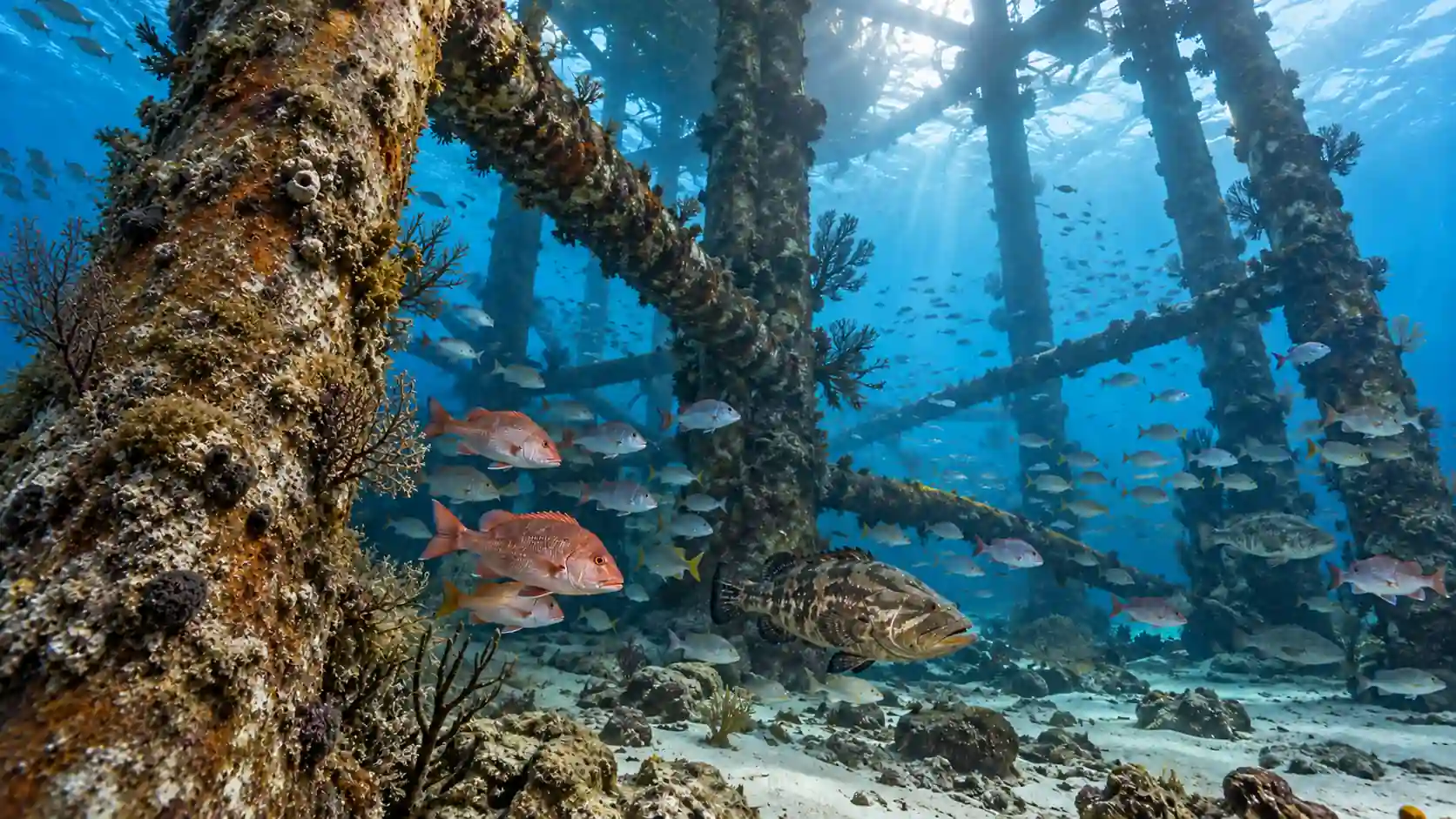
A structure would still need to satisfy applicable environmental, navigation, and safety requirements. The program described in the order excludes infrastructure associated with offshore wind facilities.
The order also calls for a review of certain approval procedures for artificial reefs in national marine sanctuaries and marine national monuments. That review does not mean every proposed reef will receive approval.
For more on why healthy habitat matters to fishing, explore our Fishing & Conservation page.
Sharks, Striped Bass, and Other Fisheries
The order calls for at least two new pilot programs that involve the recreational fishing community in testing data collection or management approaches. It specifically mentions Atlantic striped bass among the fisheries that could benefit from work on real-time information, tagging, and catch-and-release mortality estimates.
Another section calls for an interagency task force on shark and pinniped depredation. Depredation can occur when a predator takes a fish that an angler has hooked. The order also directs officials to develop a reporting protocol to help document those events.
What This Means for Anglers Right Now
The saltwater fishing executive order 2026 sets priorities for federal agencies; it does not change the rules for your next trip. Continue checking the current regulations for your state, fishing location, and target species.
The changes to watch are agency announcements about recreational fishing surveys, proposed management guidelines, permit procedures, and artificial reef projects. Those announcements will show how the order is put into practice.
What We Still Don’t Know
It is too early to say which access rules, if any, agencies will revise or rescind. The order directs reviews, but it does not identify a new season length or bag limit for a particular fishery.
It is also unclear exactly how future mobile reporting will work for individual anglers. The order calls for tools that could support both mandatory and voluntary reporting, but the details will depend on later agency action and applicable law.
Finally, an artificial reef program does not guarantee that a particular offshore structure will become a reef. Each qualifying project would still have to meet the relevant requirements.
Final Thoughts
The saltwater fishing executive order 2026 puts recreational access, fishing data, and coastal habitat on the federal agenda. Its most significant effects may come later, as agencies decide how to carry out the reviews and programs it requests.
For anglers, the best approach now is to follow existing regulations and watch for specific agency proposals. Reel Activities will continue tracking developments that could affect time on the water.
For more fishing news and updates, explore Reel Activities.
💡Takeaways
📌Saltwater Fishing Executive Order 2026 Does Not Change Current Limits
Executive Order 14430 directs federal agencies to review policies and develop plans. It does not immediately extend fishing seasons, raise bag limits, or remove permit requirements.📌NOAA Recreational Fishing Surveys Face Review
The order directs NOAA to evaluate traditional mail surveys and pursue mobile reporting tools. It also asks NOAA to consider state data for certain fisheries when federal estimates have high uncertainty and the state’s data has a lower error rate.📌Saltwater Fishing Access Rules and Permits Could Change Later
Agencies must begin reviewing regulations they determine overly burdensome. They will also evaluate longer permit terms and a shared application portal, where permitted by law.📌Artificial Reefs Could Be Built Around Qualifying Offshore Structures
The order calls for a program to consider converting certain decommissioned offshore structures into artificial reefs. Individual projects would still need to meet environmental, navigation, and safety requirements.📌Anglers May Help Improve Fisheries Data
The order calls for at least two pilot programs involving the recreational fishing community. It mentions Atlantic striped bass in connection with tagging, real-time information, and better catch-and-release mortality estimates.📌Anglers Should Keep Following Current Regulations
The practical effects of the order depend on later agency decisions. Before fishing, check the rules for your location and target species as you normally would.
What are the new fishing regulations in Texas starting in 2026?
Executive Order 14430 does not itself change Texas fishing regulations. Texas rules depend on the species, location, and whether you fish in state or federal waters. For example, Texas lists different recreational red snapper limits for those waters. Check the Texas Parks and Wildlife fishing regulations and its red snapper updates before your trip.
What are the new fishing regulations in Virginia for 2026?
The saltwater fishing executive order does not create new Virginia seasons or bag limits. Virginia’s recreational saltwater rules vary by species and can change during the year. Check the Virginia Marine Resources Commission’s current regulations for the fish you plan to target.
What are the current federal fishing regulations for the Gulf of Mexico?
There is no single Gulf-wide limit that covers every fish. Federal rules vary by species and may include seasons, size and bag limits, gear requirements, and closures. Private anglers and federally permitted charter vessels can also have different seasons. Check NOAA Fisheries’ Gulf regulations and seasonal closures, along with the relevant state agency’s updates, before fishing.
What are the laws against overfishing?
In U.S. federal waters, the Magnuson-Stevens Fishery Conservation and Management Act requires annual catch limits and accountability measures to help prevent overfishing. Fishery managers can use measures such as size limits, gear restrictions, and seasonal closures. Executive Order 14430 calls for reviews of some management guidelines but does not remove those legal requirements. NOAA explains how annual catch limits work.

Jesse Earl – Author
Jesse Earl is a passionate freshwater angler and the founder of Reel Activities. When he’s not testing gear or writing how-to guides, you’ll find him exploring hidden lakes, chasing walleye, or casting from the shoreline with a cup of gas station coffee in hand.