
Brown Trout (Salmo trutta)

The Brown trout (Salmo trutta) is one of the most iconic and challenging freshwater fish pursued by anglers. Revered for its intelligence, elusive behavior, and powerful strikes, this species has earned a reputation as a true test of skill and patience. Unlike more aggressive trout, Brown trout rely on stealth and strategy, often remaining hidden until conditions are ideal. Their ability to adapt to a wide range of cold-water environments has made them one of the most widespread and successful trout species in the world.
Overview
Brown Trout Quick Facts
Scientific Name: Salmo trutta
Habitat: Rivers, streams, lakes
Spawning Season: Fall
Activity: Low-light periods
Diet: Insects, baitfish
The Brown trout (Salmo trutta) is one of the most iconic and challenging freshwater fish pursued by anglers. Revered for its intelligence, elusive behavior, and powerful strikes, this species has earned a reputation as a true test of skill and patience. Unlike more aggressive trout, Brown trout rely on stealth and strategy, often remaining hidden until conditions are ideal. Their ability to adapt to a wide range of cold-water environments has made them one of the most widespread and successful trout species in the world.
Originally native to Europe and western Asia, Brown trout were introduced to North America in the late 1800s and quickly established themselves in rivers, streams, and deep lakes. They are easily recognized by their golden-brown to olive coloration, dark spotting, and distinctive red or orange markings along their sides. These features provide natural camouflage, allowing the fish to blend seamlessly into rocky streambeds, shaded banks, and submerged structure. Their wary nature and preference for low-light conditions set them apart from other trout species and make each encounter especially rewarding.
If you’ve recently landed a memorable Brown trout, you can share your catch on the Slab Shots page for a chance to win prizes like Bass Pro gift cards or free fishing lures. Submitting your photo helps promote responsible angling while showcasing impressive catches from across Colorado and beyond.
This comprehensive guide covers everything you need to know about Brown trout, including brown trout identification, preferred environments, the brown trout spawning season, feeding habits, activity patterns, effective methods for brown trout fishing, conservation considerations, and what makes this species such a valued brown trout freshwater species in modern fisheries.
Brown Trout Identification
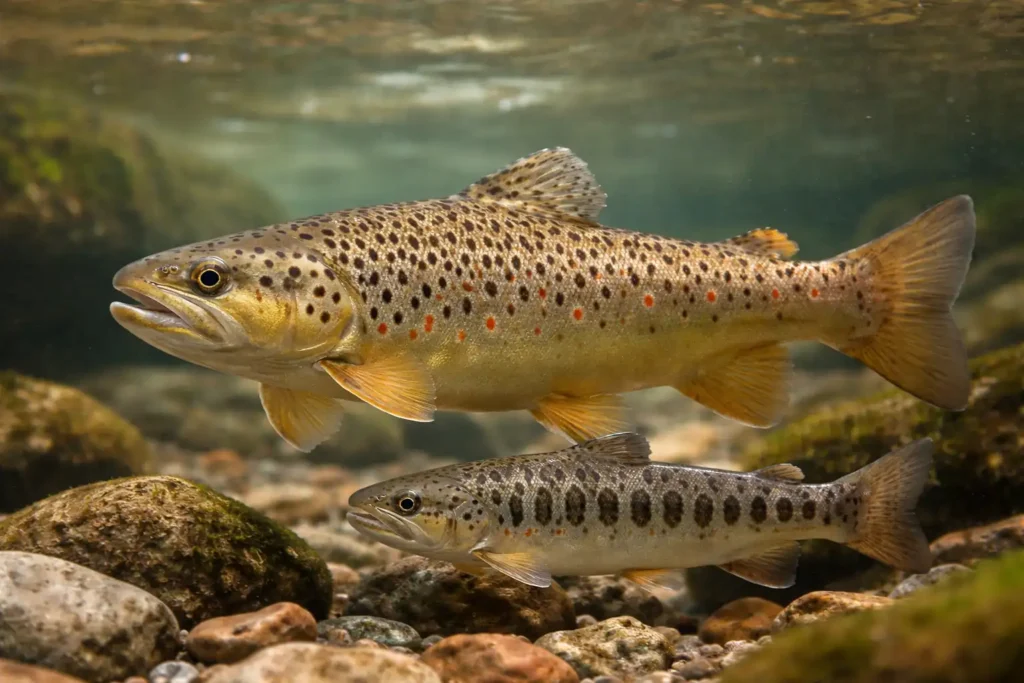
The Brown trout is one of the most distinctive and visually striking freshwater fish, admired for its rich coloration and powerful, well-built form. Unlike brighter trout species, Brown trout display more natural, earth-toned colors that allow them to blend seamlessly into their surroundings. Their bodies are thick and muscular, built for holding position in current and ambushing prey from cover rather than constant open-water swimming.
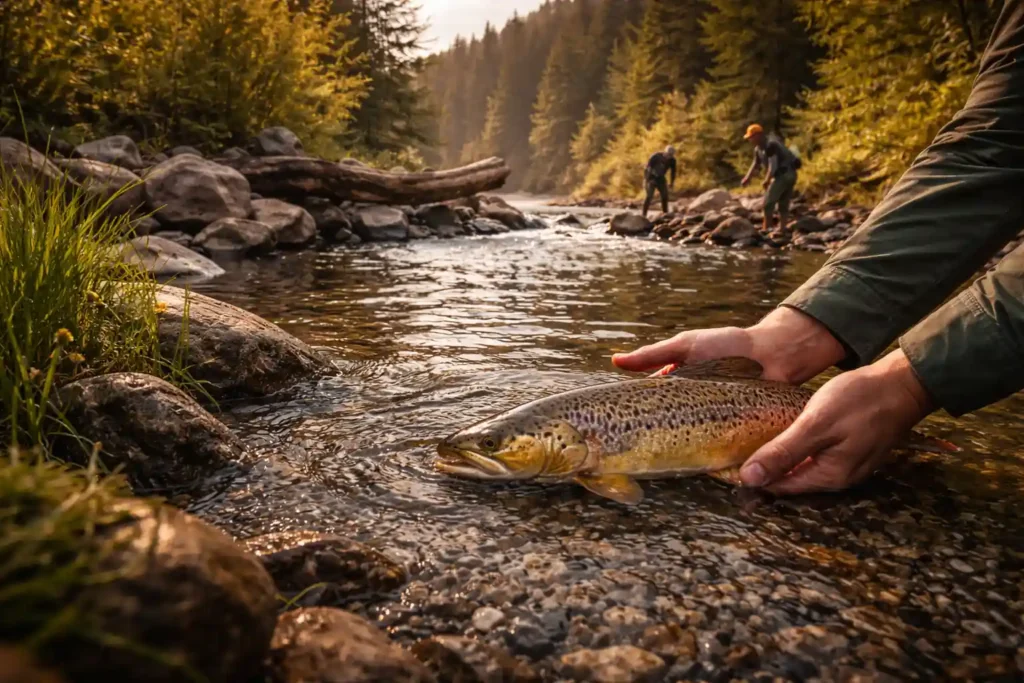
Adult Brown trout typically exhibit a golden-brown to olive body with a lighter underside. Their sides are covered in a mix of dark spots and red or orange spots, many of which are surrounded by pale halos. These markings are most concentrated along the flanks and upper body, while the fins often carry a subtle yellow or amber tint. The tail fin is generally more square or only slightly forked compared to other trout species.
Juvenile Brown trout, known as parr, display dark vertical bars along their sides called parr marks. These markings provide camouflage in shallow water and gradually fade as the fish matures. During the brown trout spawning season, mature males may develop a pronounced hooked jaw, making identification even easier.
Coloration and patterning can vary widely depending on habitat, diet, and light conditions. Fish living in clear streams often appear darker and more vividly marked, while those from deeper lakes may take on a silvery appearance. Whether stocked or wild brown trout, these variations make brown trout identification both reliable and fascinating for anglers.
Brown Trout Habitat
Understanding brown trout habitat helps anglers locate fish more efficiently. Brown trout prefer cold, oxygen-rich water and are commonly found in brown trout in rivers and streams, as well as deep lakes and tailwaters.
They favor areas with structure, such as undercut banks, deep pools, and submerged cover. Compared to other trout, Brown trout tolerate a slightly wider temperature range.
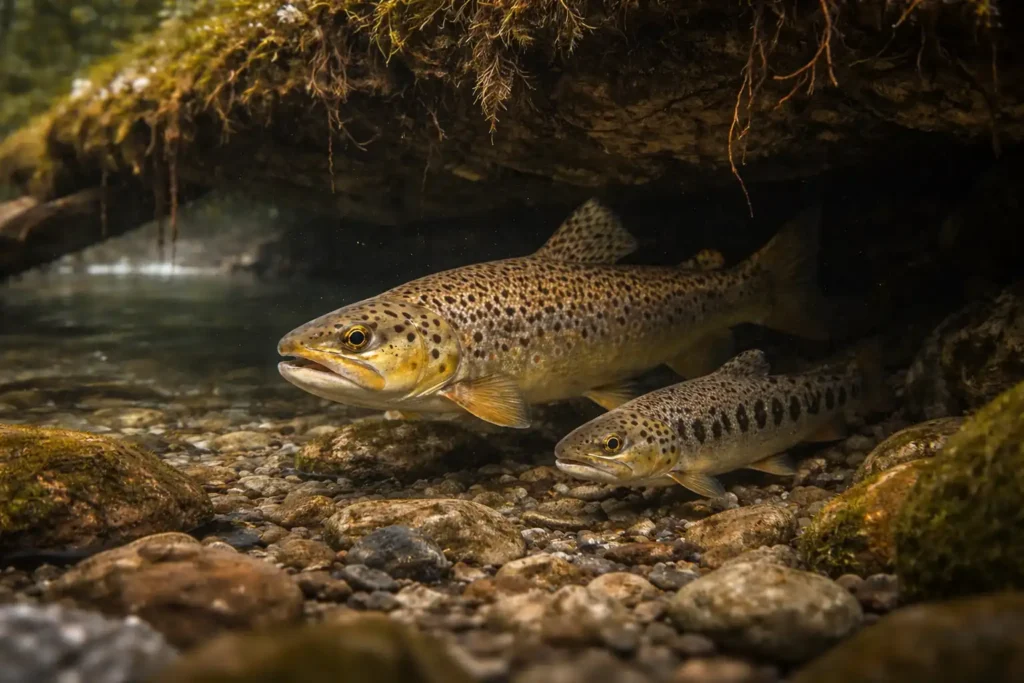
Key habitat features include:
- Deep pools
- Undercut banks
- Submerged logs and rocks
- Areas with slower current near fast water
Compared to other trout, Brown trout are more tolerant of slightly warmer conditions, allowing them to thrive in a wider range of environments.
Brown trout are commonly found in many of Colorado’s rivers, streams, and tailwaters, where cold, oxygen-rich water and stable flows support natural reproduction, as documented by Colorado Parks and Wildlife.
Spawning Season and Reproductive Behavior
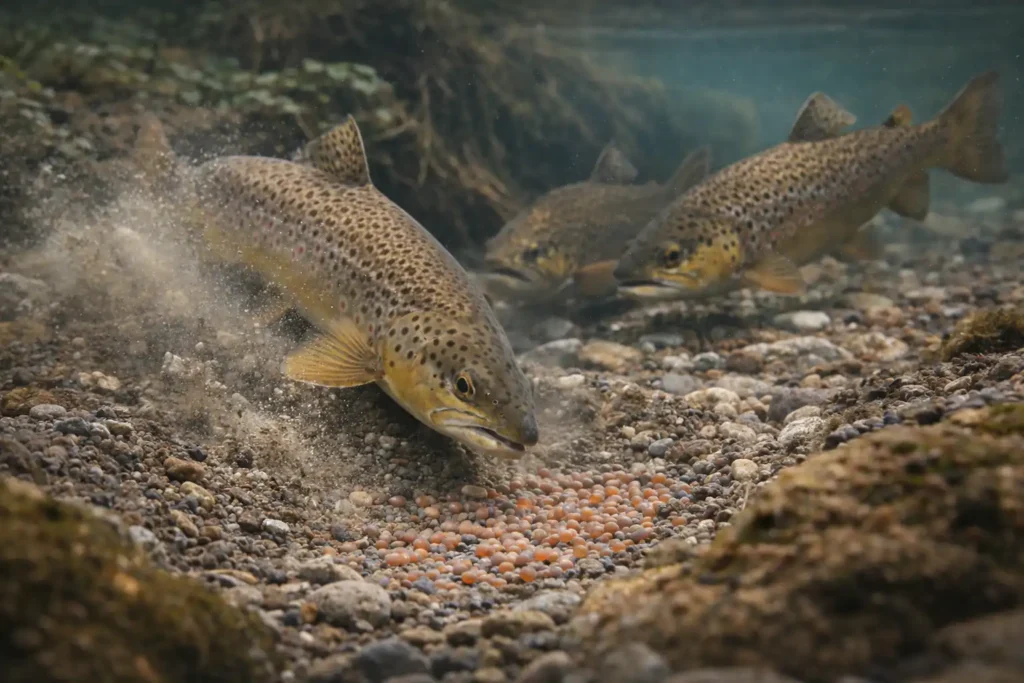
The brown trout spawning season typically occurs in the fall months, most often from October through December, depending on water temperature, elevation, and flow conditions. Spawning begins when water temperatures drop to approximately 44°F–52°F (7°C–11°C) and stream flows remain stable enough to protect developing eggs.
Female Brown trout create shallow depressions, known as redds, in clean gravel streambeds by sweeping their tails back and forth. Once the redd is prepared, the female deposits anywhere from several hundred to a few thousand eggs, depending on her size and age. One or more males then fertilize the eggs externally before the redd is covered with gravel.
After spawning, adult Brown trout leave the redd, and the eggs develop on their own throughout the winter. Incubation takes longer than in spring-spawning trout due to colder temperatures. The eggs hatch into alevins, which remain hidden in the gravel while absorbing their yolk sacs for nourishment. Once the yolk is fully absorbed, the young fish emerge as fry in late winter or early spring and begin feeding on small aquatic organisms.
Unlike Pacific salmon, most Brown trout survive spawning and may reproduce multiple times throughout their lives. In waters with healthy habitat and minimal disturbance, natural reproduction during the brown trout spawning season helps sustain strong wild brown trout populations.
When Are Brown Trout Most Active?
Brown trout are most active during low-light periods, especially early morning and late evening. These times offer reduced visibility, cooler water temperatures, and increased feeding opportunities, allowing Brown trout to move out from cover with less risk. Larger fish, in particular, rely on these windows to hunt efficiently, making dawn and dusk the most productive times for anglers targeting cautious fish.
Brown trout behavior is closely tied to water temperature, light levels, and available cover. As water warms during the middle of the day, Brown trout often retreat to deep pools, undercut banks, or shaded structure where temperatures remain cooler, and oxygen levels are more stable. In these conditions, slow presentations and precise casts near cover are far more effective than aggressive retrieves.

Seasonal changes strongly influence brown trout feeding patterns. During spring and fall, activity levels increase because water temperatures remain within a comfortable range and food sources are abundant. Fall is especially important, as Brown trout feed heavily leading up to the brown trout spawning season, making them more willing to strike well-presented offerings.
In summer, bright sunlight and warm surface water can make Brown trout extremely wary. However, overcast skies, light rain, or rising water levels often trigger increased movement and feeding. These conditions reduce visibility and can wash terrestrial insects or small prey into the water, creating short but productive feeding periods.
During winter, Brown trout slow their metabolism but continue to feed selectively in deeper runs and slower-moving water where temperatures remain stable. Subtle presentations and patience are essential during colder months, as strikes may be lighter but often come from larger, experienced fish holding prime positions.
Understanding daily and seasonal behavior patterns helps anglers approach brown trout fishing more strategically. By adapting to changes in light, temperature, and season, anglers can consistently find active Brown trout throughout the year.
Brown Trout Feeding Patterns and Diet
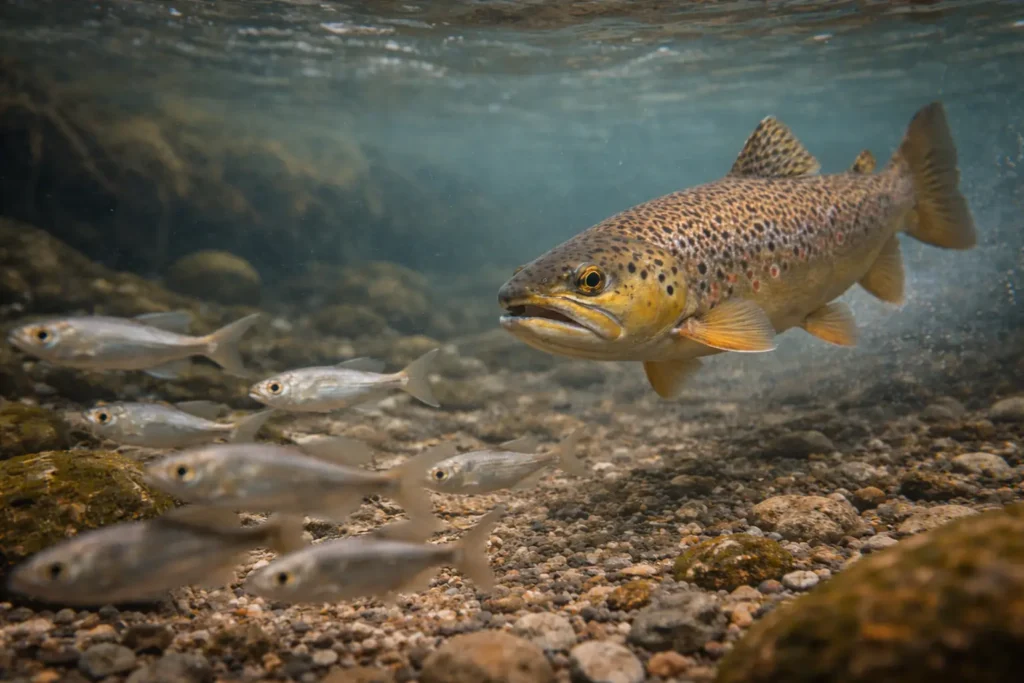
The brown trout diet evolves as the fish grows. Juveniles feed mainly on aquatic insects, while adults consume a broader range of prey including insects, crustaceans, and small fish.
As Brown trout mature, their reliance on baitfish increases, shaping their feeding habits and movement patterns.
Common food sources include:
- Aquatic insects
- Terrestrial insects
- Small fish
- Crustaceans
How to Catch Brown Trout
Catching Brown trout is widely considered one of the most rewarding challenges in freshwater fishing. Unlike more aggressive trout species, Brown trout are cautious, highly aware of their surroundings, and quick to retreat if they sense danger. Their explosive strikes and powerful runs when hooked make every successful catch feel earned, especially when targeting larger or more experienced fish.
Inline spinners are especially effective when targeting Brown trout, as their vibration and flash closely imitate small prey, and well-known designs like Panther Martin spinners are commonly used in rivers and streams.
Bait Fishing
Bait fishing can be effective when targeting Brown trout, particularly in deeper pools and slower-moving water. Natural baits such as worms, minnows, leeches, and salmon eggs closely resemble the prey Brown trout consume in the wild. Presenting bait with minimal weight and light line helps create a natural drift, which is critical for avoiding spooking fish. Keeping the bait close to cover often produces the best results, as Brown trout rarely stray far from structure.
Lure Fishing
Lure fishing is a popular and productive method, especially when water clarity allows fish to track movement. The best lures for brown trout are those that imitate small fish or aquatic prey. Minnow-style crankbaits, spoons, and subtle spinners can trigger reaction strikes when worked slowly along undercut banks, deep runs, or near submerged structure. Varying retrieve speed and pausing near cover often encourages hesitant fish to strike.
Fly Fishing
Brown trout fly fishing requires precision and careful presentation. Streamers are especially effective, as Brown trout rely heavily on baitfish as they grow larger. Swinging or stripping streamers during low-light conditions can produce aggressive strikes from larger fish. Nymphs and dry flies also work well during insect activity, but accurate drifts and realistic movement are essential due to the selective nature of Brown trout.
Tackle Tips
Light to medium-light spinning gear with 4–8 lb test line is ideal for most situations, allowing for long casts and subtle presentations. Fly anglers typically use a 5- or 6-weight rod depending on water size and fly choice. Approaching from downstream, keeping a low profile, and avoiding unnecessary movement greatly improves success. Patience and stealth are far more important than covering large amounts of water quickly.
Understanding brown trout behavior and adapting techniques to conditions plays a major role in consistent success. Matching presentation speed, depth, and timing to brown trout feeding patterns often makes the difference between a slow day and a memorable catch.
Best Lures for Brown Trout
The best lures for brown trout are those that imitate natural prey. Minnow-style lures and subtle presentations near structure are particularly effective when fish are actively feeding.
Slow retrieves near structure are often more effective than fast presentations, especially when targeting larger fish.
Brown Trout Fly Fishing
Brown trout fly fishing is effective when flies match local food sources. Streamers work well for larger fish, while nymphs and dry flies can produce results during active insect periods.
Streamer patterns that imitate small fish are especially productive for targeting larger Brown trout that rely heavily on a predatory diet.
Brown Trout vs Rainbow Trout
When comparing brown trout vs rainbow trout, Brown trout are generally more cautious and rely more heavily on structure. Rainbow trout tend to be more aggressive during daylight hours, while Brown trout favor low-light conditions.
While rainbow trout are often more visible and aggressive during daylight hours, Brown trout tend to dominate low-light conditions and hold prime locations.
Wild Brown Trout
Wild brown trout are typically more difficult to catch due to heightened awareness and natural feeding instincts. These fish are highly adapted to their environment and often hold prime locations.
Targeting wild brown trout requires a careful approach, quiet movement, and accurate casting.
Brown Trout Conservation
Originally native to Europe and western Asia but were introduced throughout North America in the late 1800s. According to the U.S.G.S database, Brown trout have since established stable populations across much of the United States.
Brown trout conservation efforts focus heavily on maintaining healthy aquatic ecosystems rather than large-scale stocking alone. Protecting clean, cold water and stable stream flows is essential, particularly because Brown trout rely on high-quality gravel beds for successful reproduction. Habitat restoration projects often emphasize reducing sedimentation, stabilizing streambanks, and preserving riparian vegetation to regulate water temperature and improve oxygen levels.
Many fisheries management agencies encourage natural reproduction where conditions allow, especially in waters supporting strong wild brown trout populations. Regulations such as slot limits, reduced creel limits, and designated catch-and-release areas are commonly used to protect larger, mature fish that play a critical role in sustaining populations. These management strategies help maintain balanced fisheries while preserving the challenging nature of Brown trout angling.
Responsible anglers play an important role in conservation by handling fish carefully, minimizing time out of the water, and avoiding known spawning areas during the brown trout spawning season. Using appropriate tackle to shorten fight times and releasing fish promptly helps reduce stress and improve survival rates. By following these practices, anglers contribute to the long-term health of Brown trout populations and the freshwater ecosystems they depend on.
Brown Trout Freshwater Species Overview
Fishing for Brown trout is more than just a way to catch fish. It is a pursuit that rewards patience, observation, and skill. Known for their cautious nature and intelligent behavior, Brown trout challenge anglers to slow down and carefully read the water. Every successful encounter feels earned, which is why this species is so highly respected in freshwater fishing.
Brown trout offer a unique balance of power and unpredictability once hooked, often using structure and current to their advantage. While they are less aggressive than some trout species, their deliberate strikes and strong runs create memorable experiences for anglers who are willing to adapt. As a brown trout freshwater species, they are also valued for their firm, flavorful flesh, making them a sustainable choice when harvested responsibly.
For many anglers, catching a Brown trout represents more than a successful outing. It reflects a deeper connection to clean water, healthy ecosystems, and the discipline required to fish in harmony with nature. Each fish tells a story shaped by its environment, season, and behavior.
Whether you are carefully presenting a fly along a shaded riverbank or working a lure through a deep pool, fishing for Brown trout captures the essence of strategy, respect for the resource, and the enduring appeal of freshwater adventure.
For more fishing guides, species profiles, and trout-catching strategies, visit ReelActivities.com.
💡Takeaways
📌Brown trout are one of the most challenging freshwater fish to pursue
Brown trout are widely respected for their intelligence, cautious nature, and ability to adapt to changing environments. Their reliance on stealth, structure, and low-light conditions makes brown trout fishing especially rewarding for anglers who take the time to understand water conditions and fish behavior.📌Accurate brown trout identification relies on spotting patterns and body structure
Brown trout identification is based on their golden-brown to olive coloration, dark and red-spotted markings with pale halos, and a thicker, more muscular body shape. Juvenile fish display parr marks that fade with age, while mature males may develop hooked jaws during the brown trout spawning season.📌Brown trout habitat centers on cold water and protective structure
Brown trout habitat includes deep pools, undercut banks, submerged logs, and shaded areas where fish can remain concealed. Brown trout in rivers and streams often hold near structure, using slower seams next to faster current to conserve energy while feeding efficiently.📌Seasonal activity and feeding patterns strongly influence success
Brown trout behavior changes throughout the year, with peak activity occurring during early morning, late evening, and overcast conditions. Brown trout feeding patterns intensify in spring and fall when water temperatures are stable and food is abundant, while summer and winter require slower, more deliberate presentations.📌Diet and lure selection are closely connected
The brown trout diet shifts as fish mature, moving from insects toward baitfish and other larger prey. This transition explains why the best lures for brown trout often imitate minnows or small fish, and why brown trout fly fishing with streamers is especially effective for targeting larger individuals.📌Conservation and responsible angling protect wild populations
Brown trout conservation focuses on protecting habitat quality, clean water, and natural reproduction, particularly in systems that support wild brown trout. Avoiding spawning areas during the brown trout spawning season, practicing careful catch-and-release, and respecting regulations all help preserve this brown trout freshwater species for future generations.
FAQ
Why are brown trout so hard to catch?
Brown trout are difficult to catch because they are highly cautious, intelligent, and sensitive to their surroundings. They rely heavily on cover, low-light conditions, and subtle feeding windows, often holding in deep pools or undercut banks during the day. Their strong awareness of vibration, shadows, and unnatural movement means anglers must use stealth, accurate presentations, and patience to be successful.
What is special about brown trout?
What makes brown trout special is their adaptability, predatory behavior, and selective feeding habits. Unlike many trout species, they often shift to feeding on small fish as they mature, allowing them to grow larger and become more dominant predators. Their unique coloration, strong survival instincts, and ability to thrive in diverse freshwater environments make them one of the most respected trout species among anglers.
Are there brown trout in Colorado?
Yes, brown trout are well established throughout Colorado. They are commonly found in rivers, streams, and tailwaters across the state, particularly in systems with cold, clean water and good structure. Many Colorado waters support naturally reproducing populations, making the state a popular destination for anglers targeting both stocked and wild fish.
Where are brown trout found in the United States?
Brown trout are found throughout much of the United States, especially in regions with suitable cold-water habitat. They are common in the Rocky Mountains, Midwest, Northeast, and Appalachian regions, as well as select rivers and lakes in the West. Originally introduced from Europe, they have successfully adapted to a wide range of freshwater systems across the country.
Why can’t you touch trout with dry hands?
Touching trout with dry hands can remove their protective slime coating, which helps prevent disease and infection. This slime layer is essential for a trout’s health, and damage to it can significantly reduce survival after release. Wetting your hands before handling a trout minimizes harm and is an important part of responsible catch-and-release fishing.
Who brought brown trout to America?
Brown trout were brought to America in the late 1800s through organized fish-stocking efforts led by government agencies and private fisheries. Eggs were imported from Europe and distributed across suitable waterways to establish new sportfishing opportunities. These introductions were highly successful, leading to the widespread presence of brown trout throughout the United States today.