
Wiper (Hybrid Striped Bass, Morone saxatilis × Morone chrysops)
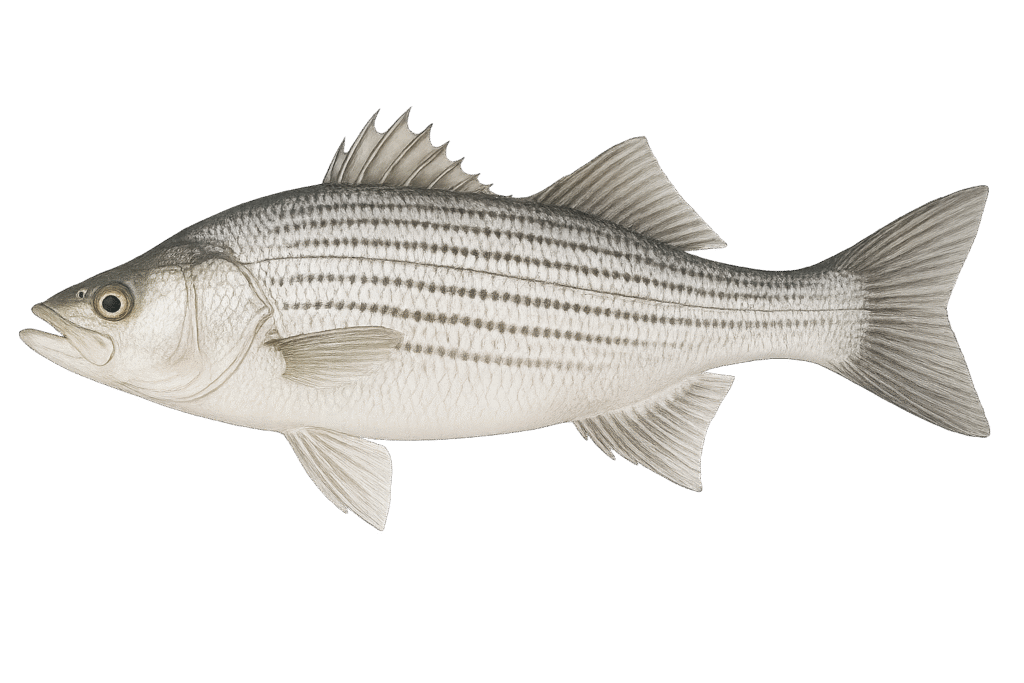
The Wiper (Hybrid Striped Bass, Morone saxatilis × Morone chrysops) is a man-made hybrid of striped bass and white bass, developed to combine the fast growth and aggressive feeding of striped bass with the adaptability and temperament of white bass. Often stocked in reservoirs and lakes across the United States, wipers have become one of the most prized sportfish for freshwater anglers.
Overview
Brown Trout Quick Facts
Scientific Name: Morone saxatilis × Morone chrysops
Habitat: Rivers, streams, lakes
Spawning Season: Fall
Activity: Low-light periods
Diet: Insects, baitfish
Wipers are celebrated for their hard strikes, schooling behavior, and surface “smash” feeding, making them a thrilling target for anglers of many styles and skill levels.
This guide will help you with identification, habitat, behavior, spawning, diet, fishing techniques, and management considerations. Be sure to check your state’s rules—wiper regulations (size, bag limits, seasons) can vary significantly.
For regional stocking data and habitat distribution, see the Kansas Department of Wildlife and Parks Wiper Profile and Colorado Parks & Wildlife Wiper Overview.
How to Identify a Wiper
Because wipers are hybrids, their traits often overlap with both parent species, but there are a few distinguishing features:
Key Traits:
- Body & Coloration: Silvery, with a fusiform (streamlined) body. Stripes tend to be broken or irregular rather than the continuous stripes of pure striped bass.
- Stripes Pattern: Above the lateral line, stripes are more likely to remain continuous; below, they may become offset, broken or faint.
- Dorsal Fins: Two dorsal fins (one spiny, one soft) separated by a notch, similar to both parent species.
- Tongue Tooth Patches: This is one of the more reliable internal characters—wipers, like white bass, have a single tooth patch on the tongue (striped bass have two).
- Gill Cover Spines: Wipers typically have a serrated operculum (gill cover) like striped bass.
- Size: Wipers often grow larger than white bass (thanks to the striped bass parent), sometimes reaching weights well above typical white bass limits.
Differences from Similar Species:
- Striped Bass: Larger overall, with clean, continuous stripes from head to tail. Striped bass also have two tooth patches on the tongue (vs. one in wiper).
- White Bass: Smaller, with more broken stripes and less aggressive appearance. White bass also have a single tongue patch, but they rarely reach sizes typical of wipers.
- Yellow Bass / Other Moronids: Usually smaller, with broken stripes below the lateral line and different fin connections
Habitat & Distribution
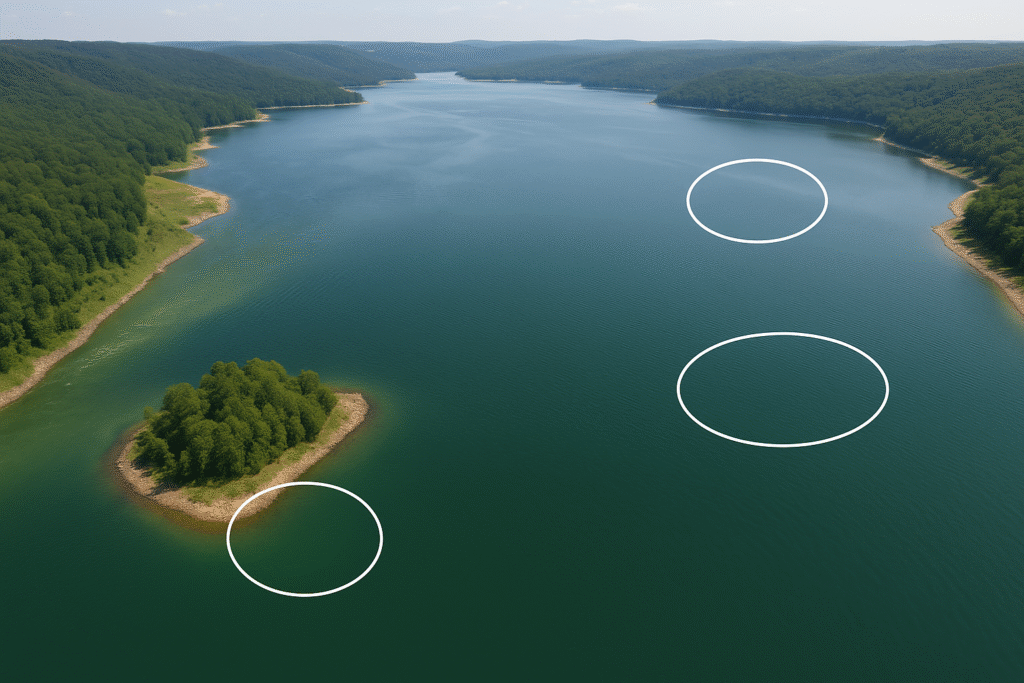
Wipers thrive in many man-made and natural freshwater systems, especially where both parent species could live.
Preferred Environments:
- Reservoirs, lakes, and impoundments—especially those with structured habitat, current zones, and forage fish presence
- River tailraces, channels, and transition zones where flow meets impoundments
- Mid-water or open-water areas near schooling forage fish
They are more tolerant of warm water and lower dissolved oxygen than either parent species in some cases, making them well-suited for challenging reservoir environments.
Because wipers are hybrids, they typically don’t reproduce well (or at all) in many waters, so their populations are often maintained by stocking.
Spawning & Reproductive Behavior
One of the features of wipers is that they tend not to maintain sustained reproduction in many systems, so their populations rely on hatchery stockings.
- Spawning Cross Direction: The most common cross is female striped bass × male white bass.
- Natural Spawning Success: Very limited in many water bodies; hybrid sterility is common or partial, so natural recruitment is rare.
- Eggs & Fry: Because of hybrid mixing, fry survival and compatibility with natural conditions tend to be lower than pure species.
Because of these reproductive constraints, fisheries managers frequently stock wipers to maintain or enhance sport fisheries.
Behavior & Feeding Habits
Wipers are aggressive, predatory, and schooling—traits inherited from both parent species.
Feeding Behavior:
- Predominantly Piscivorous: They prefer schooling prey such as shad (gizzard shad, threadfin shad) and other small schooling fish.
- Surface “Smash” Feeding: Wipers will often crash the surface to take baitfish, creating explosive strikes and splashes.
- Schooling & Ambush: They often use coordinated predation—herding bait schools, driving them upward, then striking.
Activity Patterns:
- Most active at dawn, dusk, and during low-light periods.
- Seasonal shifts: In warmer months, they may move into reservoir arms or along points; in cooler months, may stage deeper or slower-moving water.
- Mobility: Wipers may roam extensively, following bait schools.
When Are Wipers Most Active?

Wipers, also known as hybrid striped bass, are a freshwater sport fish created by crossing striped bass with white bass. They are stocked in lakes and reservoirs because they grow quickly, fight aggressively, and help control baitfish populations. Unlike many fish species, wipers do not reproduce naturally and rely entirely on stocking programs to maintain populations. They are powerful swimmers that feed primarily on baitfish and are often found schooling in open water or along drop-offs. Highly prized by anglers, wipers are known for their explosive strikes, long runs, and ability to test both tackle and endurance.
Seasonal Activity:
- Spring: Peak action as wipers move into tributaries and shallow shorelines to feed heavily before and after the spawning period.
- Summer: Remain active early and late in the day, often chasing shad schools to the surface during calm mornings or cloudy afternoons.
- Fall: Aggressively feed to build energy reserves for winter, forming large, fast-moving schools that create explosive surface boils.
- Winter: Activity slows in colder temperatures; wipers move deeper and respond best to vertical jigging or slow trolling techniques.
Daily Activity:
- Early Morning (Sunrise to 9 AM): Prime time for surface strikes as baitfish gather near structure or shorelines.
- Midday: Fish move deeper or suspend in open water near bait schools; trolling or jigging becomes most effective.
- Evening (4 PM – Sunset): Another strong feeding window, especially when winds push bait into shallow coves or points.
How to Catch Wipers
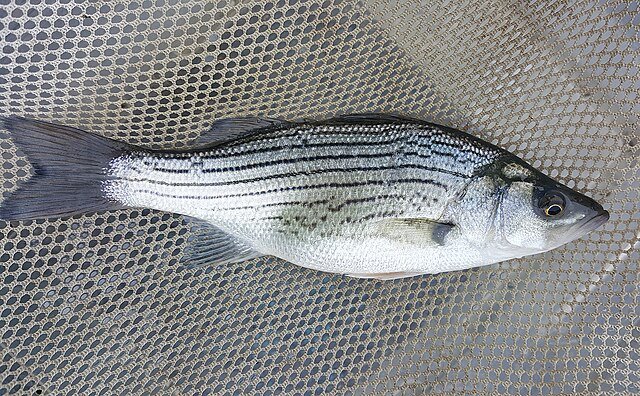
Hybrid striped bass (Morone chrysops × M. saxatilis) by Oregon Department of Fish & Wildlife , licensed under CC BY-SA 2.0.
Here are some strategies and gear tips for targeting wipers:
Gear & Tackle:
- Medium to medium-heavy spinning or baitcasting setups
- Braided or braided/fluorocarbon leader combinations (for sensitivity and strength)
- 10–20 lb line class is common, but adjust based on local water size and structure
Lures & Baits:
- Spoons, jigs, bucktail jigs
- Swimbaits and soft plastics mimicking shad
- Inline spinners or crankbaits
- Live shad or minnows when legal
Tactics & Tips:
- Look for signs of surface feeding — splash, baitfish jumping, gulls diving
- Fish near current breaks, river channel edges, submerged structure, and underwater humps
- In deeper water, troll or jig along the thermocline where wipers might stage
- Use sharp hooks and maintain a short leader to help with hookups
- Change depths and speeds until you locate the strike zone
Want to learn more about targeting freshwater fish like wipers? Explore our Freshwater Fishing Guides for in-depth tutorials, tackle tips, and seasonal patterns.
Why Fish for Wipers?
Wipers are a favorite among freshwater anglers for their unmatched power and cooperative schooling behavior. Known for blistering runs and aggressive surface feeds, they provide thrilling action whether caught from shore or boat.
Beyond sport, wipers play an important ecological role as open-water predators, helping to balance shad and baitfish populations. Their adaptability and controlled stocking make them valuable additions to many lakes and reservoirs across the U.S.
For anglers seeking heart-pounding strikes and the chance to battle one of freshwater’s strongest fighters, the wiper (Hybrid Striped Bass, Morone saxatilis × Morone chrysops) delivers an unforgettable fishing experience.
Caught an impressive wiper? Share your catch and enter our monthly contest on Slab Shots for a chance to win exclusive gear, gift cards, and get featured on Reel Activities!
Ecological & Management Considerations
Because wipers are hybrids and often don’t reproduce effectively in the wild, fisheries management must carefully monitor stocking rates, growth, and potential ecological interactions.
To learn how different states manage wiper stocking programs, visit Nevada Department of Wildlife’s Wiper Page.
Ecological Roles and Risks:
- As aggressive predators, wipers can reduce forage fish densities, which may affect other predator species in the system
- Backcrossing with parent species can pose genetic introgression risks in systems where both parent species exist naturally
- Overharvest or poor stocking strategies may lead to declines in catch rates
Management Notes:
- Many states regulate wiper harvest via size and bag limits
- Stocking strategies often balance growth, survival, and fishing pressure
- Monitoring forage base (shad, minnows) is critical to sustaining wiper growth and health
- Habitat structure, water flow, and water quality all influence success
Practice safe catch-and-release and responsible handling. Visit our Fish Care Guide to learn how to properly release wipers and keep them healthy for future anglers.
💡Takeaways
📌Wipers Are a Hybrid Powerhouse
The Wiper (Morone saxatilis × Morone chrysops)—also known as the Hybrid Striped Bass—is a cross between striped bass and white bass. This man-made hybrid grows fast, fights hard, and adapts easily, making it one of the most exciting species for freshwater anglers in North America.📌How to Identify a Wiper Fish
Wipers feature a silver-gray body with broken horizontal stripes, a single tooth patch on the tongue, and two dorsal fins separated by a notch. Their sleek, muscular build and irregular stripe pattern distinguish them from pure striped bass or white bass.📌Ideal Wiper Fish Habitat
Wipers thrive in large lakes, reservoirs, and rivers where baitfish like shad are abundant. They prefer open water and current seams near structure. Because most wipers are sterile hybrids, populations are maintained through regular hatchery stocking.📌Feeding and Behavior Patterns
Aggressive and schooling by nature, wipers feed mainly on shad and other small fish. They often attack bait schools in coordinated “smash” feeds, creating explosive surface action early and late in the day when light levels are low.📌When Wipers Are Most Active
The best times to catch wipers are at sunrise and sunset. In spring and fall, they move shallow to feed heavily; during summer and winter, they shift deeper, following baitfish schools and responding to trolling or jigging presentations.📌Why Wipers Matter to Anglers and Ecosystems
Wipers are prized for their speed, strength, and accessibility, offering anglers thrilling fights in freshwater. Ecologically, they help control baitfish populations and promote balance in managed fisheries through careful stocking and conservation.
FAQ
Is wiper a good eating fish?
Yes, wipers are considered good eating fish when prepared fresh. Their firm, white, mild-flavored meat is similar to striped bass but leaner than many other freshwater fish. For the best taste, clean and chill wipers immediately after catching, and remove the darker red flesh before cooking.
How big do wipers get?
Wipers commonly reach 3–8 pounds but can exceed 15 pounds in nutrient-rich lakes. Trophy wipers over 20 pounds have been recorded in stocked reservoirs. Their growth rate is fast, combining the size potential of striped bass with the adaptability of white bass.
Is a wiper a striper?
No—although they look similar, a wiper is a hybrid between a striped bass (Morone saxatilis) and a white bass (Morone chrysops). Wipers have broken or irregular horizontal stripes, while pure stripers have continuous lines and grow much larger in saltwater and freshwater systems.
Where can I find wiper fish?
Wipers are found in large freshwater lakes, reservoirs, and river systems across the United States. They prefer open water near schools of shad or current seams where baitfish gather. States like Colorado, Kansas, Missouri, and Oklahoma have some of the most productive wiper fisheries.
Are wiper fish good to eat?
Yes, wiper fish are excellent table fare when handled properly. Their mild flavor and flaky white meat make them ideal for grilling, frying, or baking. Anglers often compare the taste to hybrid striped bass or crappie, especially when the fish are caught from clean, cool waters.
What bait to catch wipers?
Wipers respond aggressively to both live and artificial baits. The best options include live shad, threadfin minnows, swimbaits, spoons, and bucktail jigs. During active feeding periods, topwater lures and crankbaits that mimic baitfish trigger explosive strikes near the surface.