
Redear Sunfish (Lepomis microlophus)

The Redear Sunfish (Lepomis microlophus) is a robust, deep-bodied sunfish species known for its subtle beauty, larger size, and unique diet. Often called the “shellcracker” due to its specialized diet of snails and other mollusks, the redear sunfish uses thick throat pads and molar-like teeth to crush hard-shelled prey with ease.
Native to the southeastern United States but now stocked widely, redear sunfish are typically found in warm, vegetated waters of lakes, ponds, and slow-moving rivers. They’re one of the largest sunfish species and are prized by anglers for their size, strength, and excellent table quality.
This guide covers everything from identification and habitat to spawning behavior and angling techniques—perfect for anyone interested in targeting or identifying this fascinating sunfish species.
How to Identify a Redear Sunfish
Redear sunfish are often confused with bluegill or other Lepomis species, but they have several features that set them apart.
Key Traits:
- Coloration: Olive-green to brown on the back, fading to yellow or bronze on the belly. Males develop more intense yellow-orange during breeding.
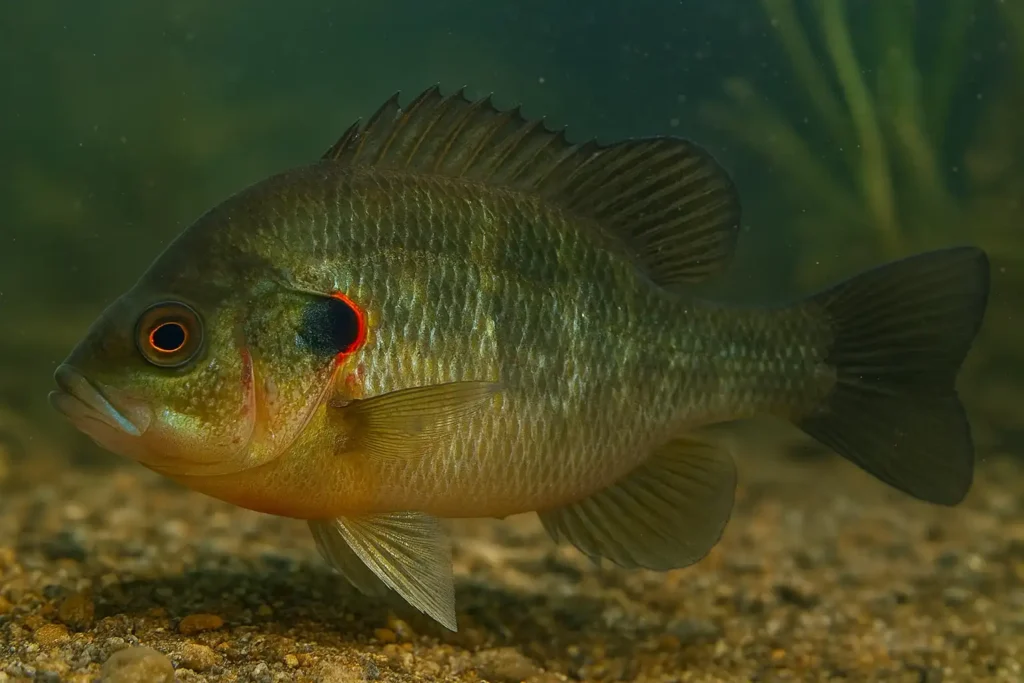
- Opercular Flap: Dark with a bright red (male) or orange (female) margin—key for distinguishing them from similar species.
- Body Shape: Deep-bodied and thick, often larger than most other sunfish species.
- Mouth: Slightly larger than bluegill, adapted for crushing snails.
- Size: Commonly 8–11 inches; trophy fish can exceed 12 inches and weigh over 2 pounds.
Redear sunfish are less vividly colored than longear or pumpkinseed sunfish, but their subtle patterning and impressive size make them easy to distinguish once you’re familiar with their look.
Differences from Similar Sunfish
Redear sunfish are often misidentified as bluegill or hybrid sunfish due to similar shapes, but you can tell them apart by these traits:
- Bluegill: Lacks the red edge on the opercular flap and typically has a more spotted, iridescent body with a smaller mouth.
- Pumpkinseed: Smaller overall with a shorter opercular flap tipped in red and bright blue/orange speckling.
- Green Sunfish: Shorter, more aggressive, with a large mouth and darker mottling on the body.
- Hybrid Sunfish: May show a mix of traits—look for the red ear flap and size to confirm redear.
Correct identification is especially important for anglers participating in state fishing records, microfishing lifelists, or selective harvest programs. Learn more about the Redear Sunfish’s distribution and ecological impact in the USGS fact sheet on redear sunfish.
Habitat: Where to Find Redear Sunfish
Redear sunfish are native to the Mississippi River Basin and southeastern U.S. but have been widely introduced throughout the country due to their popularity among anglers.
Preferred Environments:
- Lakes and Ponds: Common in warm, clear, vegetated waters with soft bottoms and abundant snail populations.
- Reservoirs: Thrive in coves, backwaters, and shallows with submerged brush or shell beds.
- Slow Rivers and Sloughs: Found in low-current zones with access to mollusk-rich substrates.
- Vegetation: Especially around lily pads, submerged logs, or artificial fish attractors.
Redear sunfish often inhabit deeper water than bluegill, particularly in the heat of summer. They favor areas where they can forage for snails and bottom-dwelling invertebrates.
Spawning and Reproductive Behavior
Redear sunfish follow the classic sunfish spawning pattern but differ slightly in their preferred nesting locations and timing.
When Do They Spawn?
- Season: Spring to early summer, typically April to June
- Temperature: Spawning begins when water temperatures reach 68–75°F (20–24°C)
Spawning Behavior:
- Nest Building: Males fan out shallow nests, often on sand or shell beds in 1–4 feet of water.
- Colony Nesting: Redears may nest near bluegill but prefer slightly deeper, cleaner areas.
- Color Display: Breeding males develop deeper coloration and become highly territorial.
- Parental Care: Males guard the nest until fry hatch and swim away, similar to other Lepomis species.
Redears tend to be more elusive during spawning than bluegill, often avoiding human activity and favoring harder-to-see nesting spots.
Feeding Habits and Activity Patterns
Daily Activity:
- Most active during early morning and late afternoon
- May move to deeper water during midday or in high heat
- Feed off the bottom using sight and vibration to locate prey
What Do They Eat?
Redear sunfish are molluscivores, with a diet focused on:
- Snails: Crushed with pharyngeal teeth—hence the nickname “shellcracker”
- Clams and Mussels: Especially juvenile or thin-shelled species
- Crustaceans: Crayfish, amphipods, and shrimp
- Aquatic Insects: Larvae of dragonflies, caddisflies, and mayflies
- Worms and Small Invertebrates
- Occasionally plant material, algae, or detritus
Their bottom-feeding habits and ability to crush hard prey help control invasive snails and make them useful in aquatic management.
How to Catch Redear Sunfish
Redear sunfish are a prized panfish, especially in the South. They’re targeted by ultralight anglers and trophy hunters alike.
Learn how to handle and release sunfish properly with our Fish Care guide.
Recommended Gear:
- Rod & Line: Light to ultralight spinning gear with 2–6 lb test
- Hooks: Size 8–12 hooks, especially for live bait
- Rigging: Carolina rigs, drop-shot, or tight-line setups for bottom fishing
Best Baits:
- Live Bait: Red wigglers, nightcrawlers, waxworms, or freshwater shrimp
- Artificial: Micro jigs, soft plastics on jigheads, or sinking fly patterns
- Scented Baits: Work well in deeper water when fish are off the bed
Tips:
- Look for gravel flats, shell beds, and deeper weedlines
- Target them during the spawn for shallow action
- Use fish finders to locate deeper redear in summer
They may not bite as aggressively as bluegill, but redears fight hard and are incredibly rewarding once located. Get more redear fishing tips and local regulations from Texas Parks & Wildlife.
Conservation Status and Ecological Role
Redear sunfish are not threatened and are widely stocked in public and private waters due to their sportfishing value and role in snail control.
Ecological Importance:
- Help control nuisance snail populations, including those that host parasites
- Prey for bass, catfish, and wading birds
- Indicator of healthy, balanced aquatic systems with diverse food webs
They are highly adaptable but still require good water quality, especially during spawning. Stocking and management programs often pair redears with bluegill to balance forage and control bottom invertebrates.
Why the Redear Sunfish Deserves Your Attention
Whether you’re a panfish enthusiast, a light-tackle angler, or a biologist monitoring freshwater balance, the Redear Sunfish is a species worth knowing. With its unique diet, subtle beauty, and powerful fight, this “shellcracker” offers both ecological benefits and exciting fishing opportunities.
Their quiet nature and specialized feeding style make them one of the more challenging—but rewarding—sunfish to catch. From small farm ponds to vast southern reservoirs, redear sunfish remind us that there’s more to panfish than meets the eye. For more tips and species profiles, visit our full collection of Freshwater Fishing Guides.
💡Takeaways
- 📌Built for Shell CrushingRedear sunfish are known as “shellcrackers” for their specialized ability to crush snails and mollusks with strong throat plates and molar-like teeth.
- 📌Larger Than Most SunfishGrowing 8–11 inches on average and sometimes exceeding 2 pounds, redear sunfish are among the largest in the Lepomis genus—prized by panfish anglers.
- 📌Red-Edged Ear Flap for Easy IDThe redear’s dark opercular flap is rimmed with bright red (or orange on females), helping distinguish them from bluegill and other sunfish species.
- 📌Prefers the Bottom of Lakes and PondsOften found near the bottom of warm, clear lakes, ponds, and reservoirs, redears frequent shell beds, brush piles, and submerged vegetation.
- 📌Subtle but Powerful FightersThough not as aggressive as bluegill, redears strike hard when located—and put up a strong, deep-bodied fight that surprises many first-time anglers.
- 📌Spawns in Spring on Shell BedsRedear sunfish spawn from April to June when water temps reach 68–75°F, fanning nests in shallow sand or shell beds just beyond the bluegill spawning zones.
- 📌Males Guard Nests with CareDuring spawning, male redears become territorial, defending their nests and fanning eggs until hatch—ensuring higher fry survival in predator-rich waters.
- 📌Valuable for Snail ControlRedear sunfish help reduce nuisance snail populations, including those that host parasites harmful to fish and wildlife—making them ecologically beneficial.
FAQ
Are redear sunfish good eating?
Yes, redear sunfish are excellent table fare. They have firm, white, mild-tasting fillets and often grow larger than bluegill, making them a favorite for anglers looking to harvest panfish for cooking.
Is redear sunfish the same as bluegill?
No, while both are members of the sunfish family (Lepomis), redear sunfish and bluegill are different species. Redear have a red-edged opercular flap, a slightly larger mouth, and specialize in eating snails—unlike the more insect-focused bluegill.
Is a red ear a shell cracker?
Yes, “shellcracker” is the common nickname for the redear sunfish. It comes from their unique ability to crush and eat snails, clams, and other hard-shelled prey using thick throat pads and specialized teeth.
Are redear sunfish bottom feeders?
Redear sunfish primarily feed near the bottom, using sight and vibration to locate snails and small invertebrates along the substrate. While they may rise to strike bait, their diet is heavily focused on bottom-dwelling prey.
Do largemouth bass eat redear sunfish?
Yes, largemouth bass will eat juvenile or small redear sunfish. Redears serve as a food source for larger predators, especially in lakes and ponds where both species coexist.
Are sunfish the same as bluegill?
Bluegill are a type of sunfish, but not all sunfish are bluegill. The sunfish family includes several species like redear, longear, pumpkinseed, and green sunfish—each with different traits, diets, and habitat preferences.