
Orangespotted Sunfish (Lepomis humilis)

The Orangespotted Sunfish (Lepomis humilis) is a small, vibrant member of the sunfish family known for its striking orange speckling and compact size. Though often overlooked compared to bluegill or pumpkinseed, the orangespotted sunfish is a unique and resilient species found in shallow, warm waters throughout the central United States.
These fish are hardy, colorful, and highly tolerant of low-oxygen or silty waters where other panfish may not survive. They are also known for their spunky attitude and aggressive feeding habits relative to their size. The orangespotted sunfish plays a key ecological role in many small stream and pond ecosystems, serving as both predator and prey.
The U.S. Fish & Wildlife Service lists the Orangespotted Sunfish (Lepomis humilis) as a native freshwater species with a wide distribution across the central United States. While small and often overlooked, it plays an important ecological role in turbid and low-oxygen waterways.
This guide offers a full overview of the species—covering identification traits, habitat, seasonal behavior, diet, spawning habits, and angling tips. Whether you’re looking to add this lesser-known sunfish to your life list or teach kids how to catch panfish in local creeks, the orangespotted sunfish offers a colorful challenge.
How to Identify an Orangespotted Sunfish
The orangespotted sunfish is one of the most easily recognizable of the smaller sunfish species. Despite its small size, its bold coloration stands out among other panfish.
Key Traits:
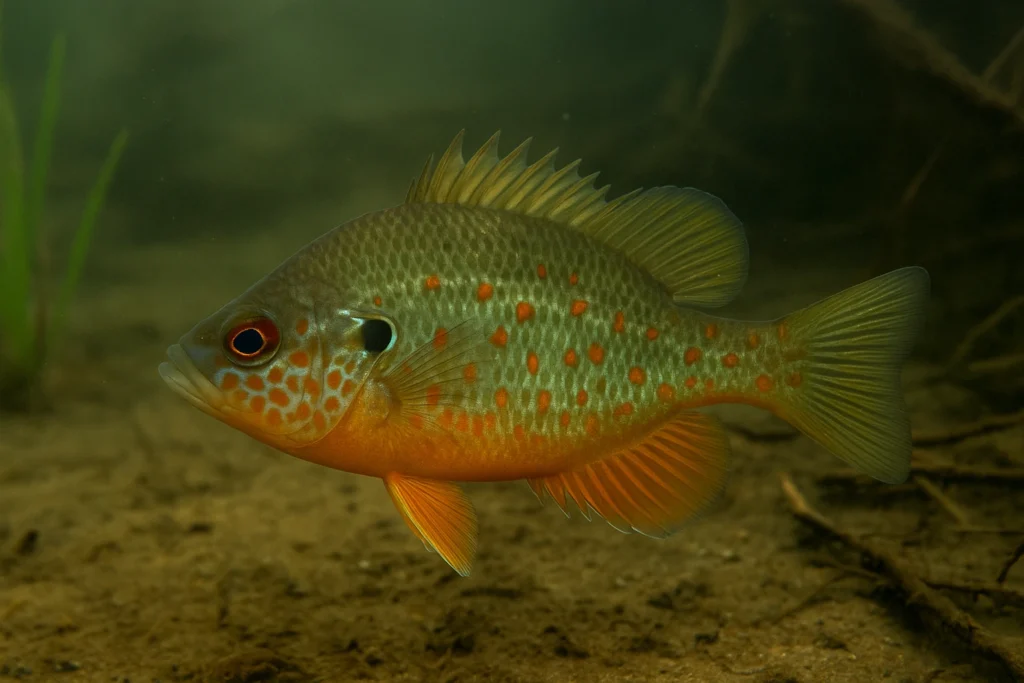
- Coloration: Olive to light brown back with bright orange spots scattered across the flanks; males develop richer colors during breeding season
- Coloration: Olive to light brown back with bright orange spots scattered across the flanks; males develop richer colors during breeding season
- Opercular Flap: Short and dark, often with a light border but lacking the distinct red of pumpkinseeds or the long flap of longear sunfish
- Cheeks and Gill Plates: Blue wavy streaks, especially noticeable in adult males
- Fins: Pectoral fins are short and rounded, not long or pointed like bluegill
- Size: Typically 2.5 to 4 inches long; rarely over 5 inches, although they appear larger due to their deep body
In addition to physical traits, their small size and preference for turbid or slow-moving water can help narrow down identification.
Feel free to check out https://nas.er.usgs.gov/queries/factsheet.aspx?SpeciesID=383
Differences from Similar Sunfish
Orangespotted sunfish are often confused with other members of the Lepomis genus due to their size and habitat preferences. However, there are some key differences that can help distinguish them:
- Bluegill: Larger overall (commonly 6–9 inches), with long pointed pectoral fins and a deep blue opercular flap. Lacks the orange speckling seen in orangespotted.
- Pumpkinseed: Similar body shape but more iridescent blue and orange on the cheeks, and a red-tipped opercular flap.
- Green Sunfish: Stockier with a much larger mouth and mottled patterning instead of distinct spots. More aggressive and often dominant in the same waters.
- Longear Sunfish: Bright and colorful with an elongated, trailing opercular flap. Found in clear, flowing water—less tolerant of turbid streams than L. humilis.
Identifying the orangespotted sunfish correctly is especially important for anglers targeting native fish or participating in lifelist or microfishing challenges. Check our fish identification page to look at other sunfish if you want to confirm any differences!
Habitat: Where to Find Orangespotted Sunfish
The orangespotted sunfish is native to the Mississippi River Basin and is most commonly found in the central U.S., especially in states like Missouri, Kansas, Iowa, Oklahoma, and parts of Texas. Their range extends into parts of the Great Plains and even reaches southern Canada in some regions.
Preferred Environments:
- Shallow Creeks and Streams: Common in slow-flowing, turbid waters with silt or sand bottoms
- Ponds and Ditches: Also found in low-oxygen or ephemeral water bodies such as roadside ditches, farm ponds, and cattle tanks
- Vegetation: Typically seen near emergent or submerged vegetation, brush, or tree roots, especially where insect life is abundant
- Water Conditions: Tolerant of high temperatures, high turbidity, and low dissolved oxygen—conditions unsuitable for many game fish
Orangespotted sunfish are considered a pioneer species in disturbed habitats. They frequently recolonize streams after droughts and can be an indicator of degraded water quality. Still, they are essential to aquatic food webs and often coexist with species like green sunfish, creek chubs, and mosquitofish.
The orangespotted sunfish has expanded its range over time and has been introduced to additional areas outside its native range. According to the USGS Nonindigenous Aquatic Species database, this species is now documented in several non-native locations, highlighting its adaptability and ecological impact.
Spawning and Reproductive Behavior
Like other sunfish, orangespotted sunfish exhibit elaborate spawning behavior and male parental care.
When Do They Spawn?
- Season: Spawning begins in late spring to early summer when water temperatures rise above 70°F (21°C)
- Spawning Window: Peak activity typically occurs from May through July, although in southern waters, breeding can extend into August
- Location: Males create shallow nests by fanning out depressions in sandy or silty substrate, often near vegetation or other cover
Spawning Behavior:
- Color Display: Breeding males display intense orange and blue coloration, particularly on the belly and opercular region
- Colony Nesting: Nests may be grouped in colonies of multiple males competing for territory and mates\
- Courtship: Males use visual displays and territorial behavior to attract females. After mating, females leave the nest, and males take full responsibility for guarding the eggs
- Egg Protection: Males fan the eggs to oxygenate them and guard against predators until the fry are free-swimming, usually within a week
Because of their small size, they often nest in marginal zones—shallow flats, vegetation edges, or muddy margins—where larger fish rarely venture. This provides protection and reduces competition for nesting space.
Activity Patterns and Feeding Habits
Daily and Seasonal Activity:
- Most Active: During daylight hours, especially in early morning and late afternoon when water temperatures are stable
- Spring to Summer: Pre-spawn and spawning seasons are marked by increased aggression and feeding activity
- Fall: Continue to feed actively in southern states or warm streams until water temperatures drop
- Winter: Activity slows significantly in colder climates. They may retreat to deeper pools or undercut banks but remain catchable using slow presentations
What Do They Eat?
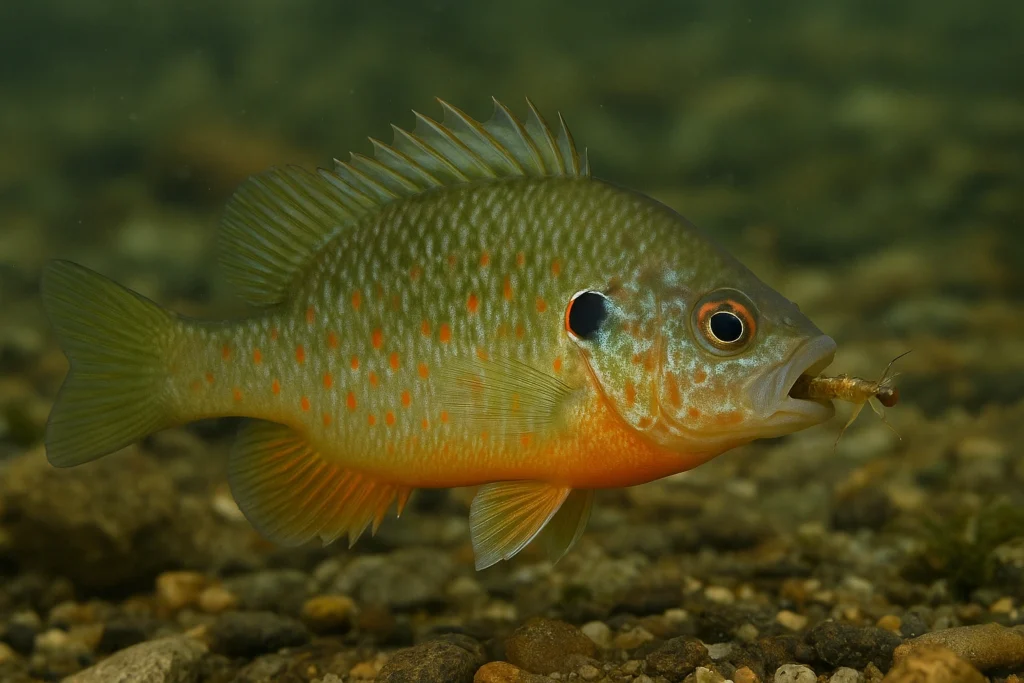
Orangespotted sunfish are generalized feeders that play a crucial role in controlling aquatic insect populations. Their diet includes:
- Aquatic insect larvae: midges, caddisflies, mosquito larvae
- Terrestrial insects that fall into the water: ants, beetles, grasshoppers
- Zooplankton and microcrustaceans: including water fleas (Daphnia) and copepods
- Small snails and aquatic worms
- Detritus and plant material: especially during low-prey seasons
Because they have small mouths, they are well-suited to targeting microscopic or small invertebrates, making them efficient feeders in creeks and marshes.
How to Catch Orangespotted Sunfish
While not typically sought after as a trophy fish, the orangespotted sunfish is perfect for microfishing, ultralight fishing, and introducing kids to the sport.
Recommended Gear:
- Rod and Line: Use an ultralight spinning rod or telescoping cane pole with 1–3 lb test line for best sensitivity
- Hooks: Tiny hooks work best—sizes 14 to 18 are ideal. Barbless options are better for catch-and-release
- Rig Type: Use a simple float rig or tight-line method with a split shot and micro hook suspended just above the bottom or along vegetation
Best Baits:
- Natural baits: Small pieces of earthworms, red wigglers, waxworms, or mealworms
- Prepared baits: Bits of corn, dough, or bread often work in muddy or warm water where they rely more on scent
- Artificial lures: Micro jigs, 1/64 oz crappie tubes, or small trout magnets with slow retrieves
Fishing Tips:
- Focus on shaded pockets and vegetation edges
- Use polarized sunglasses to sight-fish in the shallows
- Try drop-shotting with micro plastics or bead-head nymphs on fly rods
- In summer, fish early in the morning or late evening to avoid midday heat and activity lulls
Though they’re small, orangespotted sunfish fight hard and strike aggressively—especially during spawning. They’re a great introduction to finesse fishing and fish behavior.
The Orangespotted Sunfish may not win size contests, but it’s a worthy species for anglers, educators, and nature lovers. With dazzling colors, bold strikes, and surprising adaptability, it brings value to local ecosystems and fun to small-water fishing.
Whether you’re targeting them for fun, species documentation, or as part of a larger creek survey, these tiny fish teach a lot about aquatic resilience. Their ability to survive in degraded environments and maintain ecological balance makes them essential to the freshwater story.
Introduce kids to fishing with this vibrant sunfish, or check it off your lifelist as a microfishing gem. Either way, Lepomis humilis deserves more recognition—and more admiration—from anglers and conservationists alike.
Conservation Status and Ecological Role
The Orangespotted Sunfish plays an important role in small-stream ecosystems by regulating insect populations and serving as prey for larger predators like bass, herons, and snapping turtles. While not currently endangered, their presence can be impacted by changes in water quality, habitat destruction, and invasive species.
In regions where agricultural runoff or development alters stream flow and turbidity, orangespotted populations may decline. However, their tolerance to low oxygen and sediment-heavy environments gives them a competitive edge over more sensitive species. This makes them useful indicators in biological surveys and conservation monitoring.
Restoring riparian buffers, reducing erosion, and maintaining connectivity between wetlands and streams all contribute to sustaining healthy populations of Lepomis humilis.
💡Takeaways
- 📌Peak Feeding Times for Orangespotted SunfishOrangespotted sunfish are most active during daylight hours—especially in the early morning and late afternoon when water temperatures are stable. In the spring and summer, their feeding increases before and after spawning. In fall, they continue foraging in warm waters, while winter activity slows but doesn’t stop completely.
- 📌What Orangespotted Sunfish EatThese sunfish are opportunistic feeders with a varied diet that includes aquatic insect larvae like midges and mosquito larvae, zooplankton, small snails, aquatic worms, and even terrestrial insects that fall into the water. Their small mouths and efficient feeding behavior make them ideal for controlling insect populations in small streams.
- 📌Ideal Feeding Conditions and BehaviorOrangespotted sunfish thrive in turbid, shallow waters where other species may struggle. Their ability to feed in low-oxygen environments and target small invertebrates like copepods and daphnia helps them flourish in ponds, ditches, and slow-moving creeks.
- 📌Seasonal Feeding Patterns Vary by RegionIn southern parts of their range, orangespotted sunfish remain active into late fall thanks to warmer water temperatures. In northern regions, activity slows with the onset of cold weather, but they may still feed from deeper pools or undercut banks if food is available. Their seasonal behavior reflects strong adaptability across climates.
- 📌Small Mouths, Big Impact on Insect ControlAlthough small in size, orangespotted sunfish are highly efficient predators of mosquito larvae, midge pupae, and other aquatic invertebrates. Their feeding habits help regulate insect populations in streams, ditches, and wetlands, making them ecologically valuable for natural pest control.
- 📌Micro Prey and Macro BenefitsBy targeting zooplankton, aquatic worms, and detritus, orangespotted sunfish help cycle nutrients and maintain the health of freshwater ecosystems. Their constant foraging supports biodiversity in shallow waters where few other fish can thrive, reinforcing their role as ecological generalists.
Where do orangespotted sunfish live?
Orangespotted sunfish live in shallow, slow-moving freshwater environments, particularly in the Mississippi River Basin and central U.S. states like Kansas, Missouri, Oklahoma, and Texas. They thrive in muddy creeks, silty streams, ponds, roadside ditches, and areas with emergent vegetation. They’re highly adaptable and often found in waters too harsh for other sunfish.
Are orangespotted sunfish rare?
Orangespotted sunfish are not rare within their native range in the central United States. They are actually quite common in turbid, shallow, and slow-moving waters like creeks, ponds, and roadside ditches. However, because they prefer low-oxygen and silt-heavy environments, they are often overlooked by anglers who focus on clearer water or larger panfish species.
What is the most aggressive sunfish?
While orangespotted sunfish can be territorial during spawning, they are not considered the most aggressive sunfish overall. That title typically goes to the green sunfish, which has a larger mouth and bolder behavior. However, male orangespotted sunfish will aggressively defend their nests in late spring and are known to strike quickly at small baits or intruders.
Where do orangespotted sunfish live?
Orangespotted sunfish live in shallow, slow-flowing freshwater habitats, especially across the Mississippi River Basin and central U.S. states like Kansas, Missouri, Oklahoma, and Texas. They thrive in muddy ditches, silty creeks, oxbow lakes, and areas with submerged vegetation or exposed tree roots. Their high tolerance for warm, turbid, and low-oxygen waters makes them a resilient species in tough conditions.
What is the biggest orangespotted sunfish ever caught?
There is no widely recognized world record for orangespotted sunfish due to their small adult size. Most orangespotted sunfish range from 2.5 to 4 inches, with exceptional individuals reaching about 5–6 inches. While they’re not known for size, they’re admired for their brilliant colors, feisty attitude, and ecological importance in small streams and ditches.
Are orangespotted sunfish good to eat?
Yes, orangespotted sunfish are edible and safe to eat, though they are very small, usually under 4 inches. Because of their size, they are not commonly targeted as a food fish. If you do harvest them, they have mild, white flesh similar to other sunfish, but you’ll need several to make a meal. Most anglers choose to catch and release this species or enjoy them through microfishing.