
Grass Carp (Ctenopharyngodon idella)
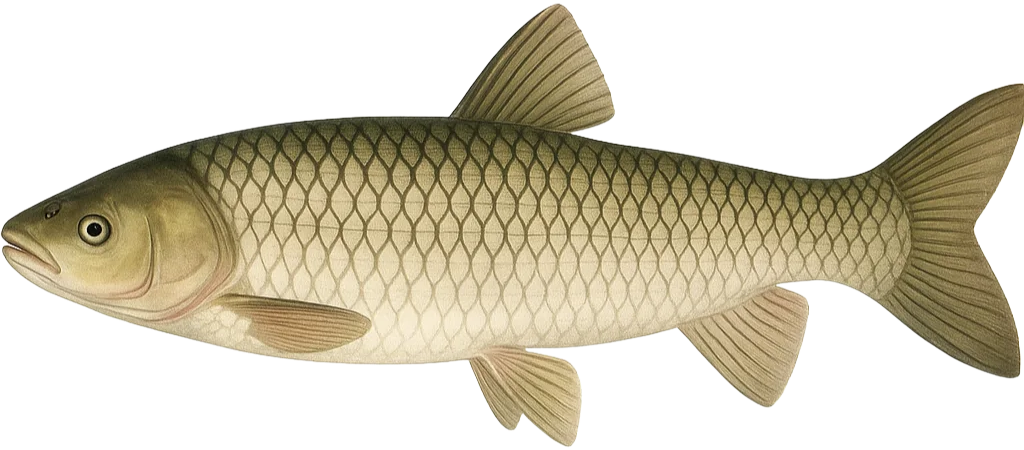
The Grass Carp (Ctenopharyngodon idella) is one of the most widely stocked freshwater fish in North America and also one of the most misunderstood. Native to East Asia, the species was introduced to the United States in the 1960s to help control aquatic vegetation. Today, sterile triploid individuals are commonly used to manage weed growth in ponds, lakes, and reservoirs. Although some regions consider them invasive when fertile populations escape into natural waterways, this fish also plays an important ecological and recreational role across the country.
For more information on invasive-species status and ecological impacts, see the US National Invasive Species Information Center’s grass carp profile.
This guide covers everything you need to know about the species, including identification traits, habitat preferences, feeding and spawning behavior, seasonal activity, effective fishing tips, growth patterns, conservation considerations, and ecological impacts. For verified scientific information and conservation notes, visit the USGS species profile.
For more freshwater fishing tips, identification guides, and gear recommendations, visit ReelActivities.com.
How to Identify a Grass Carp
This species is visually distinct from common carp and many other freshwater fish. Key features include:
Body Shape: A long, streamlined, torpedo-shaped body built for cruising through vegetation-rich water.
Coloration: Silvery gray to olive with a pale underside. Unlike common carp, they lack bronze or golden tones.
Scales: Large, diamond-shaped scales with darker edges that form a crosshatch pattern.
Mouth: No barbels. The mouth faces forward and is adapted for grazing vegetation rather than rooting in sediment.
Size: Most weigh between 10 and 35 pounds. In fertile waters, they can exceed 40 to 70 pounds.
Younger fish are sometimes mistaken for shiners or suckers, but the streamlined shape and large scales make identification straightforward.
Habitat: Where to Find Grass Carp
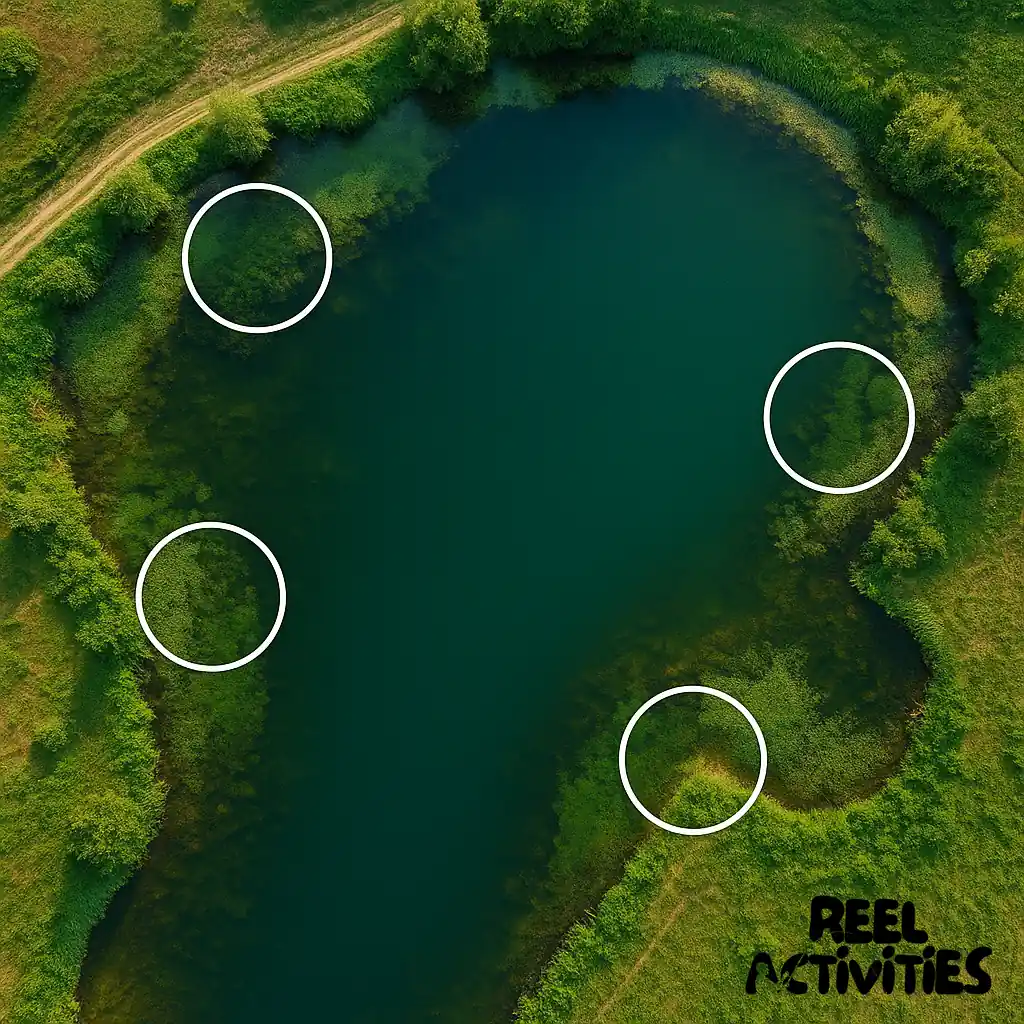
Unlike common carp, the distribution of this plant-eating fish is primarily driven by stocking programs. It thrives in areas with abundant vegetation and stable warm water.
Ponds and Small Lakes
Often stocked intentionally for weed control, these fish prefer warm, shallow areas with dense aquatic vegetation such as hydrilla, milfoil, pondweed, and elodea. Calm water with soft bottoms and moderate clarity is ideal.
Large Lakes and Reservoirs
In bigger systems, they roam vegetated coves, backwater areas, and quiet bays. They often travel in small groups while patrolling weed edges and open flats for fresh plant growth.
Rivers
Where wild populations exist, these herbivores inhabit side channels, backwaters, and slow pools with vegetation. They avoid strong currents but use gentle flow to access feeding areas.
Water Temperature and Quality
They are most active between 68 and 86 degrees Fahrenheit. The species tolerates low oxygen levels better than many sport fish, although not as well as common carp.
Spawning and Reproductive Behavior
Most stocked individuals in the United States are sterile and cannot reproduce. In places where fertile populations exist, their reproductive cycle follows a specific pattern.
Spawning Habitat: Long stretches of flowing water are required. Eggs must drift for miles before hatching.
Season: Spawning typically occurs in late spring or early summer once water reaches 68 to 75 degrees Fahrenheit.
Eggs: Females release hundreds of thousands of semi-buoyant eggs that remain suspended in the current.
Limitations: Because eggs need constant movement, reproduction cannot occur in ponds or small lakes.
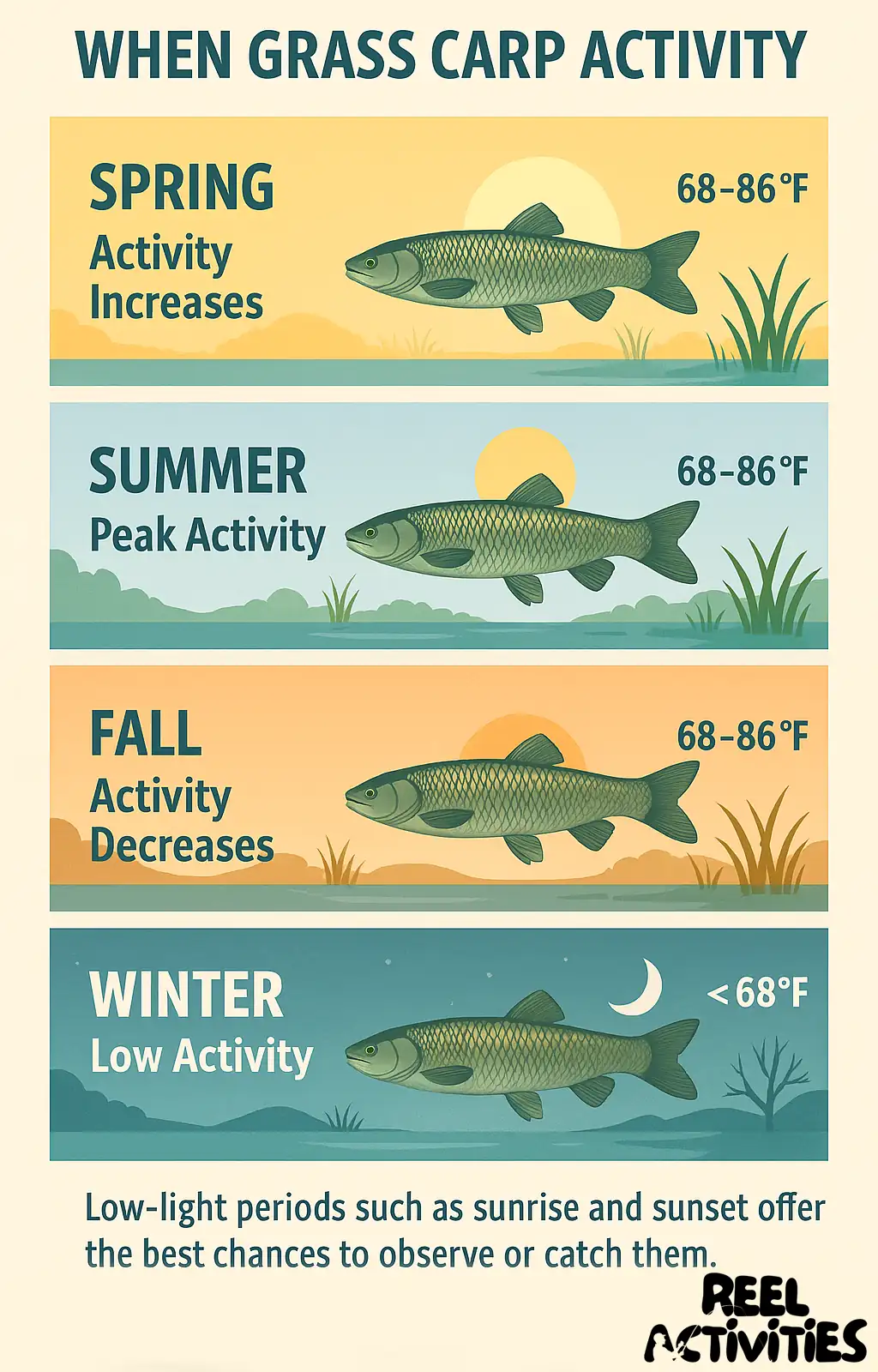
When Grass Carp Are Most Active
Activity levels are closely tied to temperature, plant growth, and time of day.
Spring: Feeding increases rapidly as plant growth begins and fish move to shallow areas.
Summer: Peak feeding occurs during this period. Early morning and late afternoon provide the best action.
Fall: Activity remains steady but slows as vegetation dies back.
Winter: They become sluggish, often holding in deeper water with reduced feeding.
Low light periods such as sunrise and sunset offer the best chances to observe or catch them.
What Grass Carp Eat
These fish are primarily herbivores throughout their adult life. Their diet includes:
- Submerged aquatic vegetation
- Algae
- Hydrilla, elodea, milfoil, pondweed
- Tender shoots and leaves
- Occasional detritus or tiny invertebrates that are swallowed accidentally
With strong pharyngeal teeth designed to shred plant material, one adult can consume more than its own body weight in vegetation each day. This is why they are used as biological weed control.
How to Catch Grass Carp
Targeting this species can be challenging because individuals are cautious, easily spooked, and selective in their feeding behavior.
Recommended Gear
- Medium heavy to heavy rods between seven and nine feet
- Reels with smooth and reliable drag systems
- Ten to twenty pound monofilament or braid
A quality drag is essential because hooked grass carp make long and powerful runs.
Effective Baits
Although primarily herbivores, they can be caught on:
- Leafy greens such as romaine lettuce, cabbage, or kale
- Fresh grass clippings
- Bread
- Fruit pieces such as watermelon or strawberries
- Corn (less effective than with common carp, but still used)
Grass carp often inspect baits for long periods, so patience is important.
Presentation Tips
- Fish quiet shallow areas with vegetation nearby.
- Use small hooks with subtle presentations.
- Keep movement to a minimum and avoid noise.
- Floating bread or greens can be used for sight fishing on calm days.
Once hooked, grass carp fight with steady, powerful runs that provide memorable battles.
Conservation and Ecological Role
Grass carp serve both helpful and controversial roles in freshwater ecosystems.
Vegetation Control
Grass carp reduce excess vegetation and can help restore balance in lakes and ponds. When stocked correctly, they improve water flow and reduce invasive plant growth.
Ecological Concerns
In systems where fertile grass carp escape or where stocking density is too high, overgrazing can occur. This can eliminate important plant beds, reduce habitat for native species, and increase turbidity due to loss of rooted vegetation.
Regulations
Many states strictly regulate grass carp. Policies may include:
- Allowing only sterile triploid fish
- Mandatory permits for stocking
- Requirements for escape barriers in private ponds
Check local regulations before stocking or fishing for grass carp.
Colorado anglers can review current stocking rules, triploid requirements, and aquatic nuisance species policies through the official Colorado Parks and Wildlife website.
Why Fish for Grass Carp
Although not traditionally targeted as a sport fish, grass carp offer a unique and rewarding fishing experience.
Challenge: Grass carp are cautious and difficult to fool, which appeals to anglers who enjoy tough sight fishing and finesse techniques.
Power: Grass carp grow to large sizes and fight with impressive strength and stamina.
Accessibility: They are commonly found in public lakes, reservoirs, and ponds, making them accessible to a wide range of anglers.
Ecological Understanding: Observing grass carp feeding behavior helps anglers understand how aquatic vegetation influences fish populations and water quality.
For scientific data and conservation details, visit the USGS Grass Carp Species Profile.
To learn how to fish for grass carp, explore our fishing guides.
💡Takeaways
📌Identification Features
Grass carp are easy to identify by their long, streamlined body, large diamond-shaped scales, silvery gray coloration, and forward-facing mouth with no barbels. These traits clearly separate them from common carp, shiners, and suckers, making visual identification reliable for anglers and biologists.📌Habitat and Distribution
Grass carp thrive in warm, vegetation-rich waters, including ponds, lakes, reservoirs, and slow-moving rivers. Their presence across the United States is driven primarily by intentional stocking programs designed for aquatic vegetation control.📌Feeding Behavior
This species is a true herbivore, feeding heavily on submerged plants, algae, and tender aquatic vegetation. Their strong pharyngeal teeth allow them to shred thick plant material, and adults can consume more than their body weight in vegetation each day.📌Seasonal Activity Patterns
Grass carp activity changes with water temperature, with peak feeding during warm summer mornings and evenings. In winter they slow down and retreat to deeper areas, while spring and fall bring moderate but consistent feeding behavior.📌Fishing Techniques
Catching grass carp requires quiet approaches and subtle presentations because they are cautious and easily spooked. Effective baits include leafy greens, bread, fresh grass clippings, and fruits, and once hooked they produce long, powerful runs that challenge even experienced anglers.📌Ecological and Conservation Notes
Grass carp can help control invasive aquatic vegetation when stocked correctly, but overgrazing can harm native plant communities and reduce habitat quality. Because of these ecological impacts, many states regulate stocking, require sterile triploid fish, and enforce strict management policies.
FAQ
Can grass carp ruin a pond?
Grass carp can ruin a pond if they are overstocked or if fertile individuals escape into a system where they can reproduce. Because they consume large amounts of submerged vegetation, too many grass carp can eliminate plant beds, reduce habitat for native fish, increase turbidity, and disrupt the natural balance of the ecosystem. When stocked in proper numbers, however, they can help control nuisance vegetation without causing ecological harm.
Are grass carps legal in California?
Grass carp are legal in California only under very strict regulations. The state requires sterile triploid grass carp and mandates specific permits for ownership and stocking. Unauthorized possession or release is prohibited because of the species’ potential ecological impact.
Why are grass carps invasive?
Grass carp are considered invasive in regions where fertile populations escape into rivers and lakes and begin to reproduce. Their heavy vegetation consumption can drastically alter plant communities, reduce habitat diversity, and change food-web dynamics. These ecological impacts allow them to spread rapidly and compete with native species, which is why the species is monitored and regulated in many states.
Do grass carps actually eat grass?
Grass carp do not eat terrestrial grass, but they do feed on aquatic vegetation such as hydrilla, milfoil, pondweed, elodea, and other submerged plants. Their plant-based diet and powerful pharyngeal teeth make them highly effective at consuming underwater vegetation, which is why they are used for biological weed control.
How many grass carps are needed for a 1 acre pond?
A typical recommendation for a 1-acre pond is between two and ten triploid grass carp, depending on how dense the aquatic vegetation is. Light vegetation requires fewer fish, while heavy weed growth may require stocking at the higher end of the range. Stocking agencies and state wildlife departments often provide exact local guidelines to ensure safe and effective vegetation control.
What are the downsides of grass carp?
The downsides of grass carp include the potential for overgrazing, loss of native plant habitat, increased water turbidity, reduced spawning areas for native fish, and altered food-web dynamics. If populations are not controlled, they can consume preferred vegetation instead of target species, leading to unexpected ecological changes. For these reasons, many states regulate stocking and require sterile fish to prevent uncontrolled reproduction.