The Complete Breakdown of the Best Time to Catch Walleye Across 4 Daily Phases
Understanding the Best Time to Catch Walleye
Understanding the best time to catch walleye starts with understanding how this species feeds, sees, and moves throughout a 24-hour cycle. Walleye (Sander vitreus) are low-light predators with specialized eyes adapted for dim conditions, which directly affects walleye fishing time of day, feeding behavior, and angling success. Rather than feeding constantly, walleye operate in predictable daily phases that are influenced by light, water temperature, season, and prey activity.
Walleye (Sander vitreus) are a widely studied freshwater species, with detailed biological and habitat information provided by the U.S. Fish and Wildlife Service.
At Reel Activities, we focus on science-based fishing strategies that help anglers understand timing, behavior, and conditions for catching freshwater species more consistently.
Below is a factual, science-based breakdown of the four daily phases that determine when do walleye bite the most, along with how seasonal and environmental conditions affect their behavior.
Best Time to Catch Walleye: Quick Daily Phase Breakdown
- Early Morning (Pre-sunrise to shortly after sunrise): One of the most reliable walleye feeding times due to low light and increased shallow-water forage activity.
- Midday (Late morning through afternoon): Walleye often hold deeper or tighter to structure as light increases, making this the least consistent walleye fishing time of day.
- Evening (Late afternoon to sunset): A major feeding window when light levels drop and baitfish move shallow, often answering when do walleye bite the most.
- Night (After dark): Night fishing for walleye can be extremely productive because walleye vision is adapted for darkness, allowing them to feed actively in shallow areas.
Phase 1: Early Morning (Pre-Sunrise to Shortly After Sunrise)
Early morning walleye fishing is productive because light levels are still low, allowing walleye to hunt efficiently while baitfish are active in shallow water. During this phase, walleye often move from deeper structure into flats, shorelines, and weed edges to feed.
This period aligns with natural walleye feeding times, as many forage species such as minnows and perch are most active near sunrise. Because walleye rely heavily on vision in low light, the reduced brightness gives them an advantage over prey.
In lakes and reservoirs, this phase is often the best time to catch walleye from shore, especially near drop-offs, points, or shallow rock transitions. In rivers, walleye may position themselves in current breaks or along seams where food is naturally funneled.
Phase 2: Midday (Late Morning to Afternoon)
As sunlight increases, walleye typically retreat to deeper water, shaded structure, or areas with reduced light penetration. During this phase, activity levels drop, which leads many anglers to question what time do walleye feed during the middle of the day.
While feeding still occurs, it is less aggressive and more location-specific. Walleye often hold tight to structure such as submerged humps, ledges, or deep weed lines. This makes walleye fishing low light conditions especially important, even during daylight, as cloud cover, stained water, or depth can recreate favorable feeding environments.
Although midday is not typically when do walleye bite the most, success is still possible with slower presentations and precise depth control.
Phase 3: Evening (Late Afternoon to Sunset)
Dusk and dawn walleye fishing periods are widely recognized as peak feeding windows, and dusk is often the most aggressive of the two. As light fades, walleye again move shallow to hunt, mirroring early morning behavior.
This phase is especially productive during warm months and is often considered the best time to fish for walleye in summer, when daytime water temperatures push fish deeper and feeding shifts to lower-light periods.
Walleye activity during dusk is driven by both vision advantage and prey movement. Baitfish frequently move shallower in the evening, creating ideal feeding opportunities and explaining when do walleye bite the most for many anglers.
Phase 4: Night (After Dark)
Night fishing for walleye can be extremely effective because walleye eyes are adapted with a reflective layer called the tapetum lucidum, allowing them to see exceptionally well in darkness. This biological advantage enables walleye to continue feeding actively long after sunset.
At night, walleye often roam shallow flats, shorelines, and rocky areas that were inaccessible or unproductive during the day. This is also a period where consistent patterns develop, making it easier to predict walleye feeding times based on location rather than depth.
Many experienced anglers report that night can rival dusk as the best time to catch walleye, particularly during stable weather conditions.
If you land a memorable walleye during peak feeding windows, you can submit your catch to our Slab Shots page for a chance to be featured and win monthly prizes.
Seasonal Influences on Daily Feeding Phases
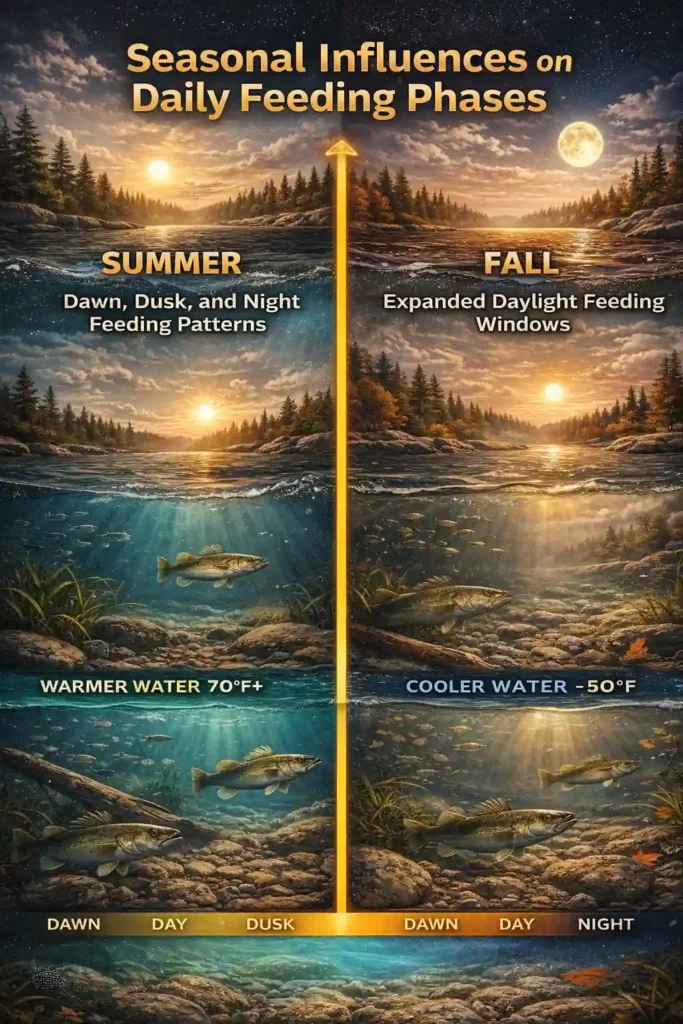
Seasonal changes significantly affect daily behavior and timing by altering water temperature, light penetration, forage movement, and walleye metabolism. These factors determine how active walleye are during each phase of the day and help explain shifts in walleye feeding times throughout the year.
Summer: Dawn, Dusk, and Night Feeding Patterns
During warmer months, the best time to fish for walleye in summer usually centers on dawn, dusk, and night. Higher surface water temperatures and longer daylight hours push walleye into deeper or shaded areas during the middle of the day. As a result, early morning walleye fishing and evening activity become more pronounced, while night fishing for walleye often produces consistent results because cooler temperatures and darkness allow walleye to feed more efficiently. In summer, these low-light periods frequently represent when do walleye bite the most, especially in clear water systems.
Fall: Expanded Daylight Feeding Windows
As seasons transition and water temperatures decline, daily feeding patterns change. The best time to fish for walleye in fall often expands into daylight hours as cooler water reduces thermal stress and increases overall activity. Shorter days and lower sun angles also create extended walleye fishing low light conditions, even during mid-morning and afternoon periods. This allows walleye to feed more frequently throughout the day rather than concentrating activity strictly around sunrise and sunset.
Forage Movement and Daily Timing
Seasonal forage availability plays a critical role as well. In summer, baitfish often seek cooler, deeper water during daylight, reinforcing dusk and night feeding behavior. In fall, many forage species move shallower and school tightly, making them easier for walleye to ambush across a broader range of daylight hours. These prey movements directly influence walleye fishing time of day and determine how long each daily feeding phase remains productive.
Temperature and Metabolism Effects
Metabolism also shifts with temperature. Warmer water increases metabolic demand, requiring walleye to feed more frequently but often in shorter, more selective windows. Cooler fall conditions slow metabolism slightly while allowing longer, more consistent feeding periods. Together, these seasonal changes explain why the best time to catch walleye is not fixed year-round but instead adapts to temperature, light, and prey behavior.
Environmental Factors That Affect Timing
Several environmental conditions influence walleye fishing tips and timing, often determining whether fish remain active outside of traditional feeding windows. Factors such as water clarity, wind, cloud cover, and lunar cycles all interact with walleye vision and prey behavior, shaping how and when walleye feed throughout the day and night.
Water Clarity and Light Penetration
Water clarity plays a major role in how much light reaches walleye habitat. In clear water systems, sunlight penetrates deeper, which can limit daytime activity and push feeding toward low-light periods. In contrast, stained or turbid water reduces light penetration, creating favorable feeding conditions for longer portions of the day. These conditions frequently enhance walleye fishing low light conditions, even during mid-morning or afternoon hours.
Wind and Water Movement
Wind influences walleye behavior by creating current, increasing oxygen levels, and breaking up surface light. Wind-driven current can push plankton and baitfish toward shorelines, points, or windblown structure, concentrating prey and triggering feeding responses. Surface chop caused by wind also reduces light intensity below the surface, further improving walleye fishing low light conditions and extending productive fishing windows beyond dawn and dusk.
Because wind speed, cloud cover, and changing weather patterns directly affect surface conditions, many anglers rely on official weather forecasts to anticipate feeding activity and light penetration.
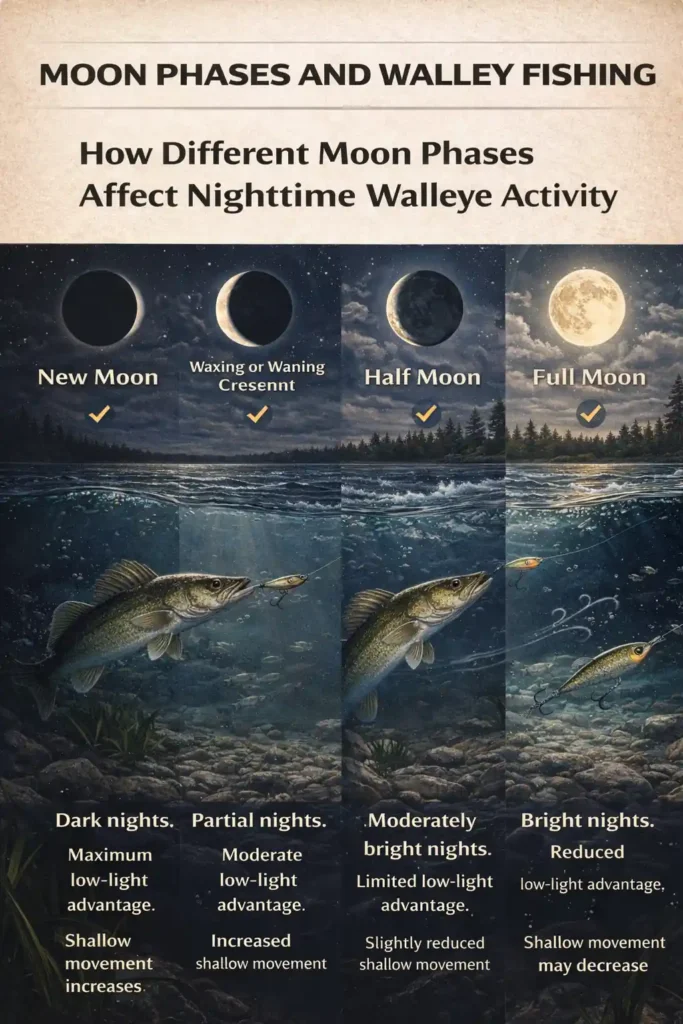
Moon Phase and Nighttime Activity
The moon phase for walleye fishing can impact nocturnal feeding behavior by altering nighttime light levels. Brighter moonlight may slightly reduce shallow movement, as prey species become more alert and visible. Darker nights, particularly during new moon phases, often extend feeding windows by enhancing walleye’s natural low-light advantage. While moon phase does not guarantee feeding activity, it can influence how shallow and how long walleye remain active after sunset.
Because moonlight levels change throughout the month, anglers often track lunar cycles using reliable moon phase calendars to better understand nighttime feeding behavior.
Cloud Cover and Turbidity Effects
Cloud cover further moderates light intensity by reducing direct sunlight, even during peak daylight hours. Overcast conditions can create consistent walleye fishing low light conditions, encouraging movement and feeding outside typical low-light periods. Similarly, increased water turbidity caused by runoff or wave action scatters light and reduces visibility, often leading to improved daytime feeding opportunities.
Final Thoughts
The best time to catch walleye is not limited to a single hour but instead follows predictable daily phases shaped by light, season, and environmental conditions. Understanding walleye fishing time of day, recognizing when do walleye bite the most, and adapting to changing conditions allows anglers to consistently target active fish rather than relying on chance.
By aligning your approach with natural walleye feeding times, you can fish more efficiently, reduce unproductive hours, and improve success across all seasons and locations.
For more in-depth species breakdowns, timing strategies, and seasonal fishing insights, explore our all of our freshwater guides.
💡Takeaways
📌Walleye Follow Predictable Daily Feeding Phases
Walleye do not feed randomly throughout the day. Their activity follows four predictable daily phases: early morning, midday, evening, and night. Each phase is shaped by light levels, prey movement, water temperature, and environmental conditions that influence walleye fishing time of day.📌Low Light Periods Produce the Most Consistent Bites
Early morning, dusk, and night are consistently when do walleye bite the most. Walleye are low-light predators with eyes adapted for dim conditions, which allows them to feed more aggressively and move into shallow areas during reduced light.📌Midday Fishing Requires Precision and Structure
Midday is the least consistent feeding period as increased sunlight pushes walleye into deeper water or shaded structure. Success during this phase depends on targeting structure, depth, and conditions that recreate walleye fishing low light conditions.📌Seasonal Changes Shift Daily Feeding Windows
The best time to catch walleye changes with the seasons. In summer, feeding activity centers on dawn, dusk, and night due to higher water temperatures, while in fall, cooler water and shorter days allow walleye to feed more frequently during daylight hours.📌Forage Movement Drives Walleye Timing
Seasonal forage availability plays a key role in determining walleye feeding times. In summer, baitfish often move deeper during daylight, reinforcing evening and night feeding. In fall, forage moves shallower and schools tightly, extending productive feeding periods.📌Environmental Conditions Can Extend Feeding Beyond Dawn and Dusk
Water clarity, wind, cloud cover, turbidity, and the moon phase for walleye fishing influence light penetration and prey behavior. These environmental factors can create favorable low-light conditions that extend feeding opportunities beyond traditional sunrise and sunset periods.
FAQ
What is the best month to fish for walleye?
The best month to fish for walleye is typically May, when post-spawn walleye feed aggressively and are more predictable in shallow and mid-depth areas. Water temperatures during this period are ideal for increased activity, and forage is abundant. In many regions, late spring offers consistent action from both shore and boat, making it one of the most reliable times of the year to catch walleye.
What time of day do walleye bite best?
Walleye bite best during low-light periods, especially early morning, dusk, and nighttime. Their eyes are adapted for dim conditions, giving them an advantage over prey when light levels are reduced. These windows often represent the best time to catch walleye, particularly in clear water systems where bright daylight can limit feeding activity.
How old is a 20 inch walleye?
A 20 inch walleye is typically 5 to 7 years old, depending on growth rates influenced by water temperature, food availability, and overall ecosystem health. Walleye in colder northern waters often grow more slowly, while fish in warmer or food-rich systems may reach this length sooner.
Do walleyes go deep or shallow in the fall?
In fall, walleyes often move shallower, especially during daylight hours, as cooling water temperatures reduce thermal stress and increase activity. Shorter days and lower sun angles create extended low-light conditions, encouraging walleye to feed in shallower zones near baitfish. However, they may still move deeper during periods of bright light or stable weather.
What color do walleyes see best?
Walleyes see green, chartreuse, and glow colors particularly well, especially in low-light or stained water conditions. Their vision is highly sensitive to contrast rather than fine detail, which is why bright or glowing colors are effective when visibility is limited. In clear water and brighter conditions, natural colors can also be effective.
How far off the bottom should you fish for walleye?
Walleye are commonly found within 1 to 3 feet of the bottom, especially when feeding near structure or along drop-offs. While they often relate closely to the bottom, walleye will rise higher in the water column when actively chasing baitfish. Adjusting lure depth to stay just above bottom structure is often key to triggering strikes.

Jesse Earl – Author
Jesse Earl is a passionate freshwater angler and the founder of Reel Activities. When he’s not testing gear or writing how-to guides, you’ll find him exploring hidden lakes, chasing walleye, or casting from the shoreline with a cup of gas station coffee in hand.