The 12 Best Kayak Gear Items for Safety and Comfort

Whether you’re just starting out or you’ve been paddling for years, having the best kayak gear can make all the difference. The right equipment keeps you safe, comfortable, and prepared for whatever the water throws your way. From beginner must-haves to gear that enhances long trips, this guide covers the 12 best kayak gear items every paddler should pack before heading out. Before hitting the water, make sure you have a fishing license if you plan on fishing.
Whether you enjoy a peaceful paddle on a lake, ocean kayak touring, or all-day fishing excursions, the following gear list will ensure you’re ready for it all. Always check the weather before you take your kayak out on the water.
1. Personal Flotation Device (PFD)
Safety should always come first, and nothing is more important than a properly fitted PFD (personal flotation device). This is the most essential kayak gear item, even for experienced swimmers. Look for Coast Guard-approved life jackets made specifically for paddling—they’re designed with high-back support and large armholes, allowing full mobility and long-term comfort.
Tip: Many kayaking PFDs have zippered pockets to store a whistle or snack bar.
2. Kayak Paddle (Plus a Spare)
Your paddle is your most-used tool—it’s literally what keeps you moving. Investing in a lightweight paddle made from fiberglass or carbon fiber can help reduce fatigue during long paddles. Be sure to choose the right paddle length for your height and kayak width.
And don’t forget a backup paddle—especially if you’re on a solo or backcountry trip. Paddle failure or accidental loss happens more often than you’d think. Use this REI guide to choose the right kayak paddle length and material.
Bonus accessory: A paddle leash keeps it tethered in case of a drop or capsize.
3. Dry Bags and Waterproof Storage
Keeping your gear dry is essential, especially on longer trips or when paddling in rough water. Use dry bags of various sizes to store items like your phone, wallet, snacks, an extra base layer, and your first aid kit. Opt for roll-top or compression-style closures with durable buckles for a secure seal.
These are some of the most underrated but important kayak accessories you can own.

Buy on Amazon
(As an Amazon Associate, we earn from qualifying purchases. This helps support our site at no extra cost to you.)
4. Bilge Pump or Sponge
Water in the cockpit is unavoidable, especially with sit-inside kayaks or after heavy rain. A bilge pump helps you remove large amounts of water quickly, while a sponge helps mop up what’s left.
Keeping your kayak dry enhances comfort and safety—and helps prevent slippery footing when entering or exiting.
5. Comfortable Kayak Seat or Cushion
Most stock seats don’t offer much padding or lumbar support. After just an hour or two, you’ll start to feel it in your back and hips.
Upgrading to a padded seat with back support or adding a gel cushion can drastically improve your paddling endurance. This is a small investment that makes a big difference for both day trips and multi-day touring.
Some cushions are self-inflating or ventilated to reduce sweat buildup.
6. First Aid Kit
A compact, waterproof first aid kit is one of those must-have kayak equipment items that you hope you never need—but absolutely should bring. Choose a kit that includes blister pads, bandages, antiseptic wipes, tweezers, ibuprofen, antihistamines, and emergency supplies like a thermal blanket.
If you’re kayaking in remote areas, consider adding a snake bite kit, trauma dressing, or a compact emergency shelter.

Buy on Amazon
(As an Amazon Associate, we earn from qualifying purchases. This helps support our site at no extra cost to you.)
7. Safety Whistle and Signal Mirror
n low-visibility or emergency situations, shouting often isn’t enough. A marine-grade whistle (usually included on good PFDs) and a signal mirror or waterproof flashlight can help you alert boaters or rescuers.
In some states, a sound-producing device is required by law for kayakers.
8. Anchor or Drift Sock
Anchoring in current or wind helps you fish, take photos, or just relax without constantly repositioning your kayak. A folding anchor or a drift sock (sea anchor) helps you maintain your spot without drifting far.
This gear is especially useful for kayak fishing or birdwatching. Use an anchor trolley system to control your anchor angle.
9. Navigation and Communication Tools
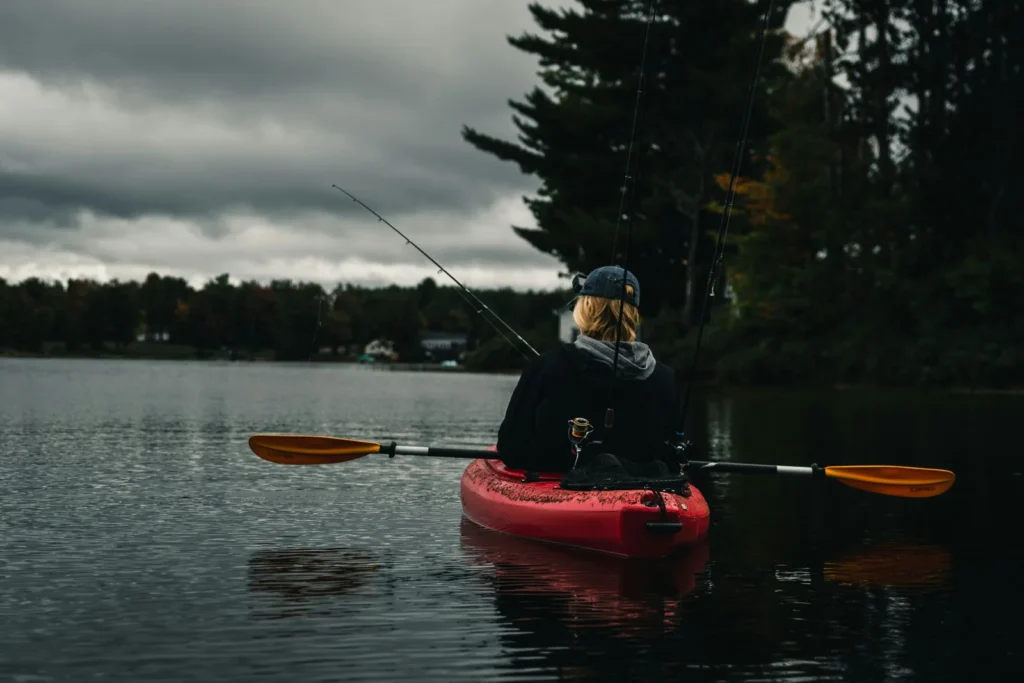
For those new to paddling or exploring unfamiliar territory, reliable navigation gear is crucial. Here’s what we recommend:
- A laminated map or waterproof chart
- A compass or handheld GPS unit
- A waterproof phone case or VHF marine radio for communication
This is essential kayaking gear for beginners who might underestimate how quickly conditions (or cell signals) can change. Apps like Navionics or Paddle Logger are helpful—but don’t rely on them alone.
10. Sun Protection Gear
Kayakers are constantly exposed to sun and glare. Protect yourself with a mix of clothing and gear:
- Wide-brim hat or cap with neck flap
- Polarized sunglasses with retainer strap
- Lightweight UPF-rated clothing (hoodies, pants)
- Reef-safe sunscreen (SPF 30 or higher)
Even on cloudy days, sun exposure on the water can be intense. Stay protected to avoid burns, dehydration, and long-term skin damage.
11. Kayak Cart or Trolley
Tired of dragging your kayak to the waterline? A kayak cart makes transport effortless. These wheeled trolleys are especially useful if you’re paddling solo or parking far from the water.
Choose a foldable cart with durable tires that work on sand, gravel, or rocky terrain. Store it in your kayak hatch or strap it on deck.
12. Rod Holders and Gear Crates (for Anglers)
If you use your kayak for fishing, adding rod holders, a gear crate, and even a fishfinder can turn your boat into a fully functional fishing machine.
Use adjustable or flush-mounted rod holders to keep your hands free while trolling or baiting. Crates help organize tackle boxes, pliers, and bait containers. You can also install a bait board, cup holder, or anchor trolley for next-level fishing convenience. Want to identify the fish you catch while paddling? Use our Fish Identification page to learn about species near you.
We recommend the PLUSINNO Fishing Rod Holders for Boats because they’re durable, easy to install, fully adjustable, and it doesn’t require any drilling to install, making them ideal for kayak anglers who want secure and flexible rod placement.

Buy on Amazon
(As an Amazon Associate, we earn from qualifying purchases. This helps support our site at no extra cost to you.)
Why Choosing the Best Kayak Gear Matters
Equipping your kayak with the best kayak gear means more than just safety—it boosts comfort, improves your efficiency, and helps you stay focused on the fun. From essential kayak gear like PFDs and dry bags to premium kayak accessories like padded seats and navigation tools, every item on this list serves a purpose.
Whether you’re a beginner or a seasoned paddler, having these must-have kayak equipment items on board prepares you for all kinds of conditions—calm lakes, tidal rivers, or open water coastlines.
💡Takeaways
📌The Best Kayak Gear Makes Every Trip Safer and Smoother
Investing in the best kayak gear helps you paddle more efficiently, stay comfortable longer, and be ready for unexpected situations.📌Safety First: PFDs, Whistles, and First Aid Are Non-Negotiable
Every kayaker should wear a properly fitted personal flotation device. A safety whistle and a compact waterproof first aid kit are also essential for handling unexpected situations.📌Dry Bags and Navigation Tools Help You Stay Prepared
Dry bags protect your valuables from water damage, while maps, compasses, or GPS devices keep you oriented during longer or unfamiliar paddling trips.📌Sun Protection and Paddle Comfort Matter More Than You Think
Wearing sun-protective gear and using polarized sunglasses can prevent sunburn and fatigue. Upgrading your seat or adding a gel cushion makes long paddles much more comfortable.📌Fishing from a Kayak Requires the Right Accessories
If you plan to fish, rod holders, gear crates, and anchors are must-haves. The PLUSINNO Fishing Rod Holders for Boats are an excellent choice because they are durable, adjustable, and easy to mount without drilling.
FAQ
What accessories do I need for a kayak?
The most important kayak accessories include a personal flotation device (PFD), paddle, dry bags, bilge pump, seat cushion, safety whistle, and navigation tools like a map or GPS. If you’re kayak fishing, you’ll also want rod holders, gear storage crates, and an anchor or drift sock. These accessories improve safety, comfort, and overall paddling performance.
Do fishing kayaks flip easily?
Fishing kayaks are designed to be wider and more stable than recreational models, so they don’t flip easily under normal conditions. However, like all small watercraft, they can tip if weight is distributed unevenly, during aggressive movements, or in rough water. Using stabilizers or outriggers can add extra balance for standing or casting.
How to fish on a kayak for beginners?
Start by choosing calm, familiar waters and packing essential fishing kayak gear like a rod holder, tackle crate, anchor, and safety gear. Use compact rods and lures, and keep your setup simple. Sit down while casting and keep your gear secured to avoid losing items if you tip. Always wear a PFD and check local fishing license requirements before heading out.
Are kayak stabilizers worth it?
Yes, kayak stabilizers (or outriggers) can be worth it if you’re new to paddling, have balance concerns, or plan to stand while fishing. They add buoyancy and reduce tipping, especially on narrow or lightweight kayaks. They’re a great upgrade for beginners or anglers who want more confidence while moving around in the kayak.
Can you be too fat for a kayak?
Kayaks come with different weight capacities, so it’s important to choose one that suits your body type and gear load. Many kayaks can accommodate paddlers over 300 pounds, especially sit-on-top or fishing models. Check the manufacturer’s specs and allow at least 50 pounds of buffer for gear and safety.
Are longer or shorter kayaks more stable?
Shorter kayaks (under 10 feet) tend to be more stable and easier to maneuver, especially for beginners or casual paddlers. Longer kayaks (over 12 feet) are faster and better at tracking in a straight line but may feel less stable to new users. For the most stability, look for kayaks with a wider hull and flat bottom design.

Jesse Earl – Author
Jesse Earl is a passionate freshwater angler and the founder of Reel Activities. When he’s not testing gear or writing how-to guides, you’ll find him exploring hidden lakes, chasing walleye, or casting from the shoreline with a cup of gas station coffee in hand.