10 Best Flies for Fall Trout Fishing Success
When the air gets crisp and leaves start to drop, trout fishing in the fall enters a prime season. But to stay successful, you need the best flies for fall trout — the kind that match seasonal food sources and trigger aggressive strikes.
Trout change their behavior in autumn. Cooler water slows them down, but pre-spawn aggression makes them strike with purpose. Whether you’re nymphing deep pools, skating dries over riffles, or stripping streamers along undercut banks, this list of the top 10 fall trout flies will help you hook up when others can’t.
These are the best flies for fall trout based on real-world performance, not guesswork. We’ll cover what each fly imitates, how to fish it, and why it’s a must-have for your fall trout arsenal.
Understanding Fall Trout Behavior and Weather Patterns
Before diving into the flies themselves, it’s helpful to understand how fall weather patterns affect trout behavior. As days shorten and temperatures drop, water temperatures cool gradually. This seasonal transition makes trout more active than during summer heat, but also less aggressive than in spring.
Water Temperature
Trout are cold-water species, and fall brings water back into their preferred comfort zone (typically between 50°F and 60°F). This results in increased feeding activity, particularly in the late morning through mid-afternoon as temperatures stabilize, when trout are most efficient at digesting food. Feeding patterns like these have been studied extensively in controlled trout environments, showing how critical water temperature is to active feeding windows. Knowing when the water hits this range helps determine the best time to fish and what flies to use.
Cloud Cover and Barometric Pressure
Overcast skies often trigger stronger hatches, especially of Blue-Winged Olives (BWOs) and midges. On days with falling barometric pressure, fish may become more active just before a storm, while bright, high-pressure days can make trout more wary. Adapting your fly choice and presentation to the weather is key to success.
Flow Conditions
In fall, rivers tend to run lower and clearer. This increases visibility for both angler and trout. It also means fish may congregate in deeper runs or shaded pools to feel more secure. Lower flows demand a stealthier approach and more subtle presentations.
With those weather considerations in mind, let’s break down the 10 best flies for fall trout.
Blue-Winged Olive (BWO)

Buy on Amazon
(As an Amazon Associate, we earn from qualifying purchases. This helps support our site at no extra cost to you.)
Recommended hook size: Sizes 18 to 22
Why it’s one of the best flies for fall trout: Blue-Winged Olives hatch reliably throughout autumn, especially on overcast days. Trout dial in on these tiny mayflies in calm, slow water. They’re often the only active surface hatch during late October and even into November.
How to fish it: Use a CDC Comparadun, Parachute BWO, or RS2 emerger during surface activity. If you spot trout sipping just below the surface film, try a trailing emerger with a gentle presentation on 6X tippet.
Weather tip: Cloudy days with a light drizzle are perfect for a BWO hatch. Keep an eye out for rising trout in slow runs and tailouts.
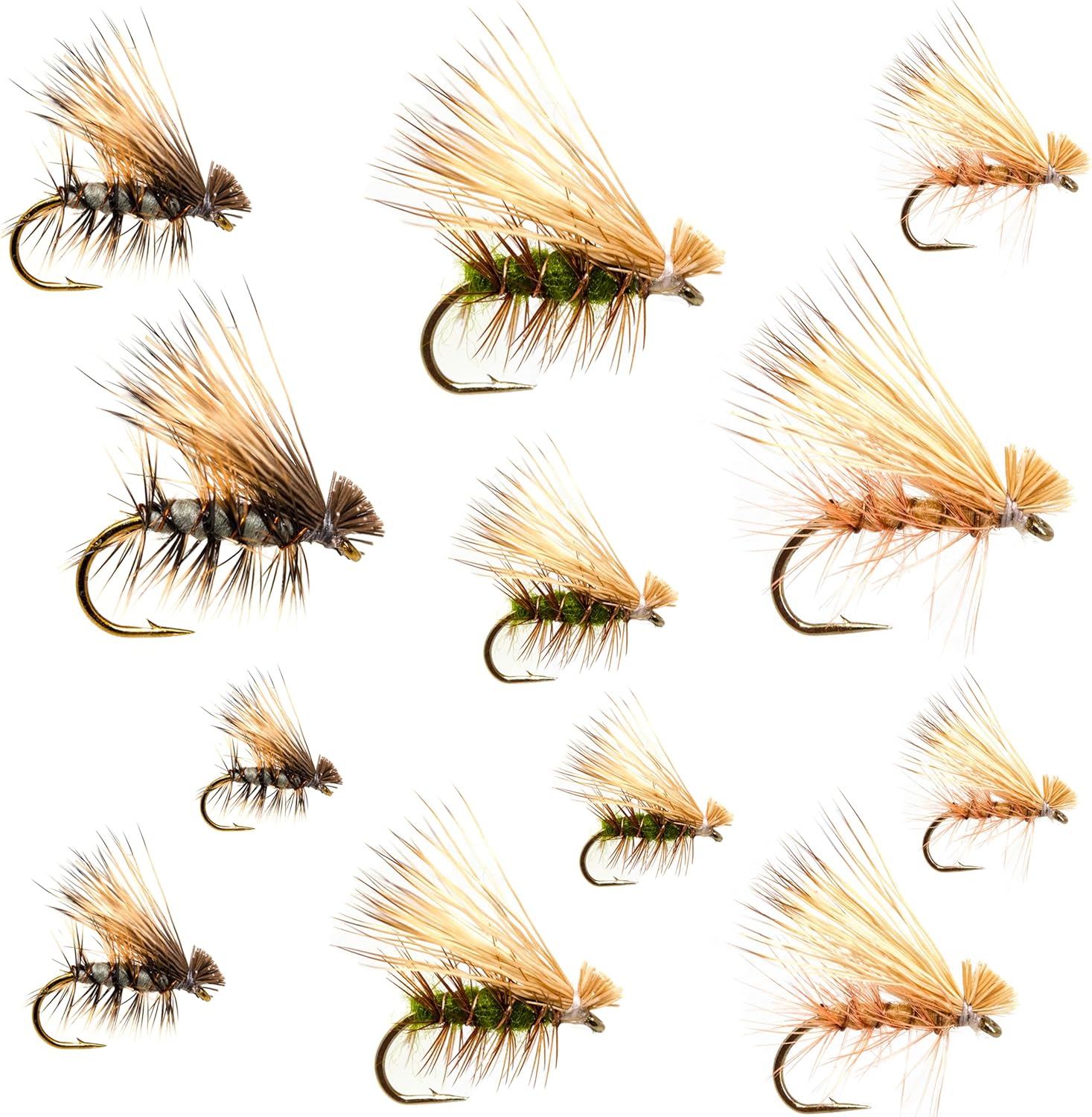
Elk Hair Caddis
Buy on Amazon
(As an Amazon Associate, we earn from qualifying purchases. This helps support our site at no extra cost to you.)
Recommended hook size: Sizes 12 to 16
Why it works in fall: The Elk Hair Caddis is a reliable fall dry fly that imitates October hatches and caddis spinners. Trout aggressively take these flies in late September through November, especially near rocky banks and riffles.
How to fish it: Dead-drift just downstream of structure or skate it across seams during dusk and dawn. Even without a visible hatch, trout key in on its silhouette.
Weather tip: Warm evenings after cool, sunny afternoons often trigger caddis activity. Work rocky tails and pocket water for top results.
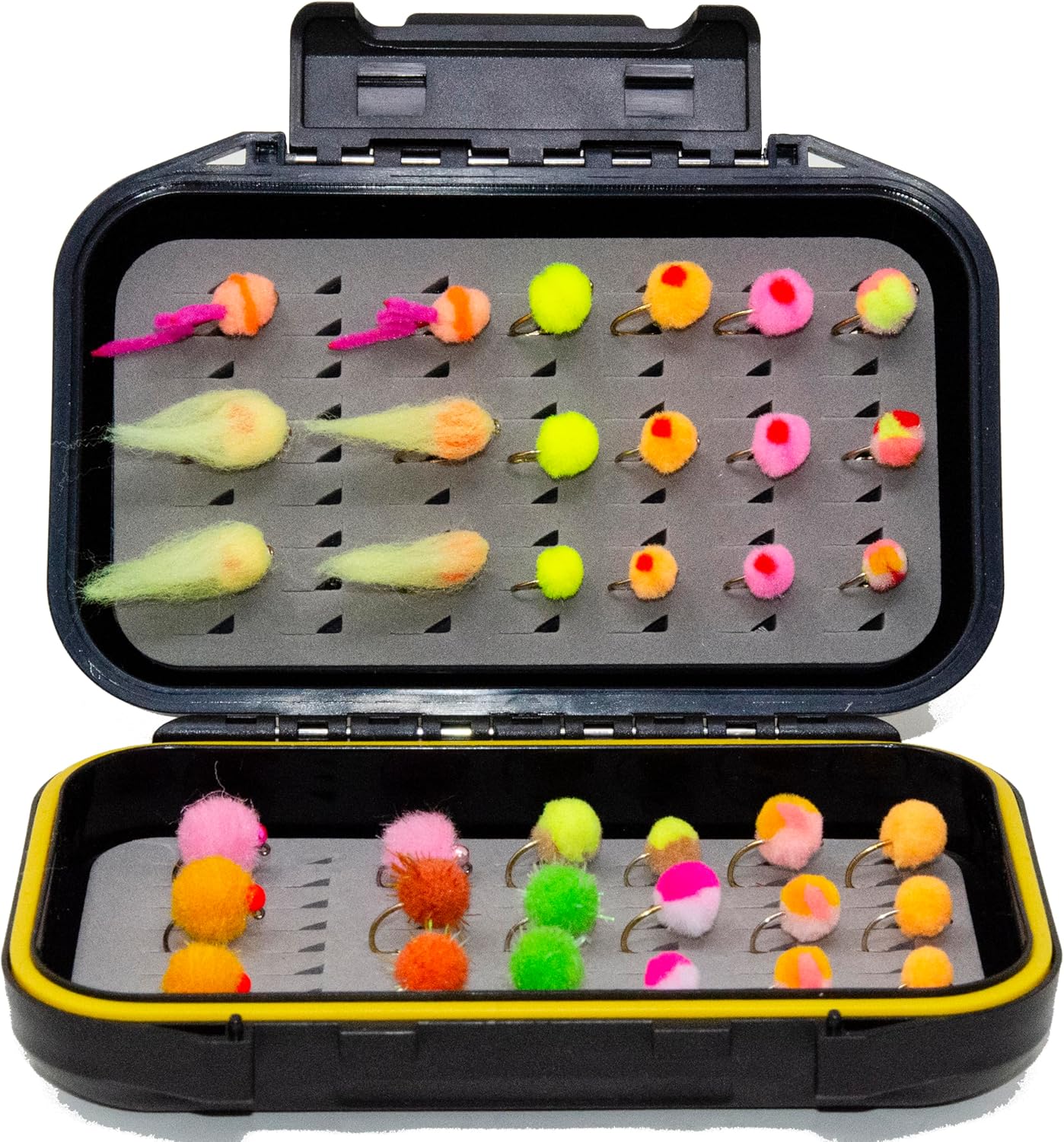
Egg Patterns
Buy on Amazon
(As an Amazon Associate, we earn from qualifying purchases. This helps support our site at no extra cost to you.)
Recommended hook size: Sizes 12 to 16
Why trout love them: During the spawn, brown and brook trout lay eggs, making these patterns irresistible. Egg flies are some of the top trout flies for autumn, especially for catching rainbows feeding downstream of spawning redds. If you’re targeting stocked or wild bows this fall, don’t miss our full guide on how to catch rainbow trout using bait, spinners, and spoons.
How to fish it: Dead-drift under an indicator with split shot to get near the bottom. Pair it with a small midge or nymph for a tandem rig that increases hookups.
Weather tip: Slightly higher flows from early fall rains can spread eggs downstream and concentrate fish in soft edges and tailouts.
Zebra Midge

Buy on Amazon
(As an Amazon Associate, we earn from qualifying purchases. This helps support our site at no extra cost to you.)
Recommended hook size: 18-22
Small but deadly: Midges are a primary food source in colder water. The Zebra Midge is a must-have in tailwaters and spring creeks, where trout feed heavily on these year-round bugs. Its simplicity and effectiveness earn it a spot among the best flies for fall trout.
How to fish it: Fish it below a dry fly or as a dropper on a nymph rig. Use red, black, or olive versions depending on water clarity.
Weather tip: On bright, calm days with no surface activity, midges are your best bet. Fish deeper and slower.
Woolly Bugger

Buy on Amazon
(As an Amazon Associate, we earn from qualifying purchases. This helps support our site at no extra cost to you.)
Recommended hook size: 6-12
Aggressive fall strikes: The Woolly Bugger imitates leeches, baitfish, and stoneflies. In fall, trout are aggressive, especially brown trout preparing to spawn. That makes this versatile fly one of the best flies for fall trout in lakes, rivers, and streams.
How to fish it: Swing it, strip it, or dead-drift it through deep pools and seams. Black and olive are top choices, but white or two-tone versions can shine in pressured waters.
Weather tip: After a rainstorm that muddies the water slightly, use a darker or flashier Bugger to stand out in low visibility.
Pheasant Tail Nymph

Buy on Amazon
(As an Amazon Associate, we earn from qualifying purchases. This helps support our site at no extra cost to you.)
Recommended hook size: 14-20
Fall food staple: The Pheasant Tail Nymph mimics a wide range of aquatic insects. It’s one of the best flies for fall trout, especially in clear water where a natural presentation is key.
How to fish it: Fish it under an indicator or tight-line nymph it through riffles and runs. Add a bit of flash or a beadhead to get deeper.
Weather tip: Fish PTs on cooler mornings when trout are feeding low in the water column before switching to dries later in the day.
Chubby Chernobyl Ant

Buy on Amazon
(As an Amazon Associate, we earn from qualifying purchases. This helps support our site at no extra cost to you.)
Recommended hook size: 10-12
Surprising fall producer: Grasshoppers may be fading in fall, but trout still look up. This high-floating attractor fly doubles as a dry-dropper anchor and remains one of the best flies for fall trout in sunny weather.
How to fish it: Use in a hopper-dropper rig with a trailing Zebra Midge, PT Nymph, or egg pattern. Fish it close to grassy banks or structure.
Weather tip: Sunny afternoons with light wind can knock remaining hoppers into the water. Work banks and undercut edges.
Scud or Sowbug

Buy on Amazon
(As an Amazon Associate, we earn from qualifying purchases. This helps support our site at no extra cost to you.)
Recommended hook size: 12-18
Tailwater staple: In tailwaters with abundant vegetation, scuds and sowbugs are essential food sources. Trout key in on them, making these patterns some of the best flies for fall trout, especially in technical rivers.
How to fish it: Drift near the bottom in slow water. Orange and gray are effective color choices.
Weather tip: Scuds are most effective in spring-fed rivers with consistent temperatures. Use them on chilly mornings when insect activity is minimal.
Soft Hackle Wet Flies

Buy on Amazon
(As an Amazon Associate, we earn from qualifying purchases. This helps support our site at no extra cost to you.)
Recommended hook size: 14-18
Old-school meets fall success: Soft hackles imitate emerging insects. Swinging them through riffles draws aggressive strikes from fall trout. Their movement and simplicity make them one of the most timeless and best flies for fall trout.
How to fish it: Fish across and downstream with a steady swing. Try tandem rigs with an upstream nymph for more action.
Weather tip: Try them on warm fall days during caddis or BWO emergences. Subsurface movement entices wary fish.
Slumpbuster

Buy on Amazon
(As an Amazon Associate, we earn from qualifying purchases. This helps support our site at no extra cost to you.)
Recommended hook size: 4-8
Big fish fly:
The Slumpbuster is a compact and deadly streamer that imitates sculpins, baitfish, or even leeches. Its weighted cone head, dense body, and flowing rabbit strip give it a pulsing, lifelike movement in the water. When fall trout—especially browns—are feeling aggressive or territorial, this fly often draws explosive strikes.
How to fish it:
Use a sink-tip or intermediate sinking line to get the Slumpbuster down fast. Cast it across or slightly downstream, let it sink, then retrieve with short strips and long pauses. Vary your speed until you find what triggers a chase. Focus on deep pools, cut banks, and below structure like boulders or fallen trees.
Weather tip:
The Slumpbuster excels on overcast days, just before or after a cold front, and during low-light periods like dawn and dusk. When the water is slightly stained or trout are hugging bottom structure, this is your go-to fly.
Bonus Fall Tips:
Before hitting the water, make sure your trout fishing license is up to date. Regulations vary by state, and fall is a popular enforcement period.
- Fish midday: Fall trout feed most during the warmest part of the day.
- Stealth matters: Low flows and clear water mean spooky fish. Use 5X or 6X tippet.
- Think deep: Cold water pushes trout into deeper pools and slow seams.
- Adjust fly color and size: Match clarity and sunlight with fly choice. Use dull tones on bright days and flashy or dark patterns in cloudy conditions.
Final Thoughts: Build the Ultimate Fall Fly Box
Having the best flies for fall trout makes a huge difference. Whether you’re fishing tailwaters, freestones, or lakes, these 10 patterns cover dries, nymphs, eggs, and streamers. Fall trout are hungry, aggressive, and willing to strike — if you give them what they want.
As fall conditions shift with the weather, it’s important to stay flexible. Use the right fly in the right conditions, observe trout behavior closely, and don’t be afraid to change patterns when the action slows down.
Stock your fly box, fish smart, and enjoy the colors of the season. These are more than just the best flies for fall trout — they’re your ticket to unforgettable hookups.
💡Takeaways
📌Fall Trout Are Most Active in 50–60°F Water
Trout feed more aggressively during fall when water temperatures stabilize between 50°F and 60°F. Target late mornings through mid-afternoons for peak activity, especially during stable weather patterns.📌Overcast Weather Boosts Hatch Activity
Cloudy, low-pressure days trigger reliable insect hatches like Blue-Winged Olives (BWOs) and midges. These are critical triggers for surface feeding in cooler months.📌Match the Hatch: Fall Trout Flies Must Imitate Seasonal Food
The best flies for fall trout include imitations of active fall insects (like BWOs and October caddis), egg patterns during spawning periods, and streamers that resemble sculpins, baitfish, or leeches.📌Use Dry-Dropper and Nymph Rigs in Clear, Low Water
In fall, rivers tend to run lower and clearer. Stealthy presentations with dry-dropper rigs (like Chubby Chernobyl + Zebra Midge) or weighted nymph setups are highly effective.📌Streamers Trigger Aggressive Fall Browns
Fall brown trout become territorial and aggressive. Streamers like the Slumpbuster are excellent for catching trophy fish, especially before cold fronts or during low-light hours.📌Rainbow Trout Still Feed Below the Surface
Fall rainbows feed primarily on drifting egg patterns and tiny midges. Target deeper holding water with slow presentations and subtle patterns.📌Water Temperature Directly Affects Feeding
Scientific studies confirm that water temperature plays a key role in trout feeding behavior. Timing your fishing around optimal temperatures improves your chances of success.
What flies to use for trout in the fall?
In the fall, the best flies to use for trout include Blue-Winged Olives (BWOs), Zebra Midges, Pheasant Tail Nymphs, Egg Patterns, Soft Hackles, and streamers like the Slumpbuster. These flies match what trout feed on in cooler water: small aquatic insects, drifting eggs, and baitfish. Fall trout often feed lower in the water column, so nymphs and egg patterns are especially effective.
What is the best fly to use in October?
One of the most productive flies in October is the Elk Hair Caddis, especially in areas where October caddis are present. Paired with a dropper like a Zebra Midge or Pheasant Tail, this setup covers both surface and subsurface feeding. Streamers also start producing well in October as brown trout get more aggressive.
What is the best lure for trout in the fall?
For conventional anglers, the best lures for fall trout include small spinners, spoons, and jerkbaits that mimic baitfish. Gold, silver, and natural-colored patterns work well. Soft plastic minnows and trout worms in natural colors also get bites, especially when fished slow in deeper pools.
What are the best flies for trout in September?
September is a transitional month. Trout are still active near the surface early in the month, so dry flies like BWOs, Elk Hair Caddis, and Chubby Chernobyls work well. As the month cools down, midges, nymphs, and eggs become more consistent. Start the month with hoppers and finish with smaller bugs and deeper presentations.
What do trout bite on in October?
In October, trout bite on midges, caddis patterns, mayfly emergers, and egg flies. Streamers become increasingly effective, especially for brown trout. Overcast weather and cooling water temperatures trigger more consistent feeding—so fishing the right fly at the right depth becomes key.
What color fly is best for trout?
The best color fly for trout depends on light conditions and water clarity. Natural colors like olive, brown, and black are reliable in clear water. On darker days or in stained water, flies with flash, red, or white can help attract more strikes. Subtle color shifts can make a big difference, especially in pressured water.

Jesse Earl – Author
Jesse Earl is a passionate freshwater angler and the founder of Reel Activities. When he’s not testing gear or writing how-to guides, you’ll find him exploring hidden lakes, chasing walleye, or casting from the shoreline with a cup of gas station coffee in hand.